


TL;DR: Sonic & Sega All-Stars Racing is a kart racing game developed by Sumo Digital and published by Sega, released in 2010 for many platforms. It has a cast of favorite Sega characters, Sega-themed courses, and character-specific All-Star moves. Gameplay, graphics, sound, variations between the console, Wii and DS versions, can it hold up as a real alternative to Mario Kart?
Game Details at a Glance
| Detail | Info |
|---|---|
| Game | Sonic & Sega All-Stars Racing |
| Developer | Sumo Digital |
| Publisher | Sega |
| Release Date | February 23, 2010 (NA) / February 26, 2010 (EU) |
| Platforms | Xbox 360, PS3, PC, Wii, Nintendo DS, iOS, Arcade |
| Genre | Kart Racing |
| ESRB Rating | E (Everyone) |
| Players | 1–4 local; online multiplayer on console and PC |
| Sequel | Sonic & All-Stars Racing Transformed (2012) |
Introduction: What Is Sonic & Sega All-Stars Racing?
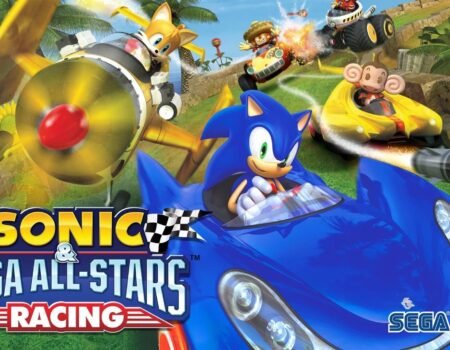
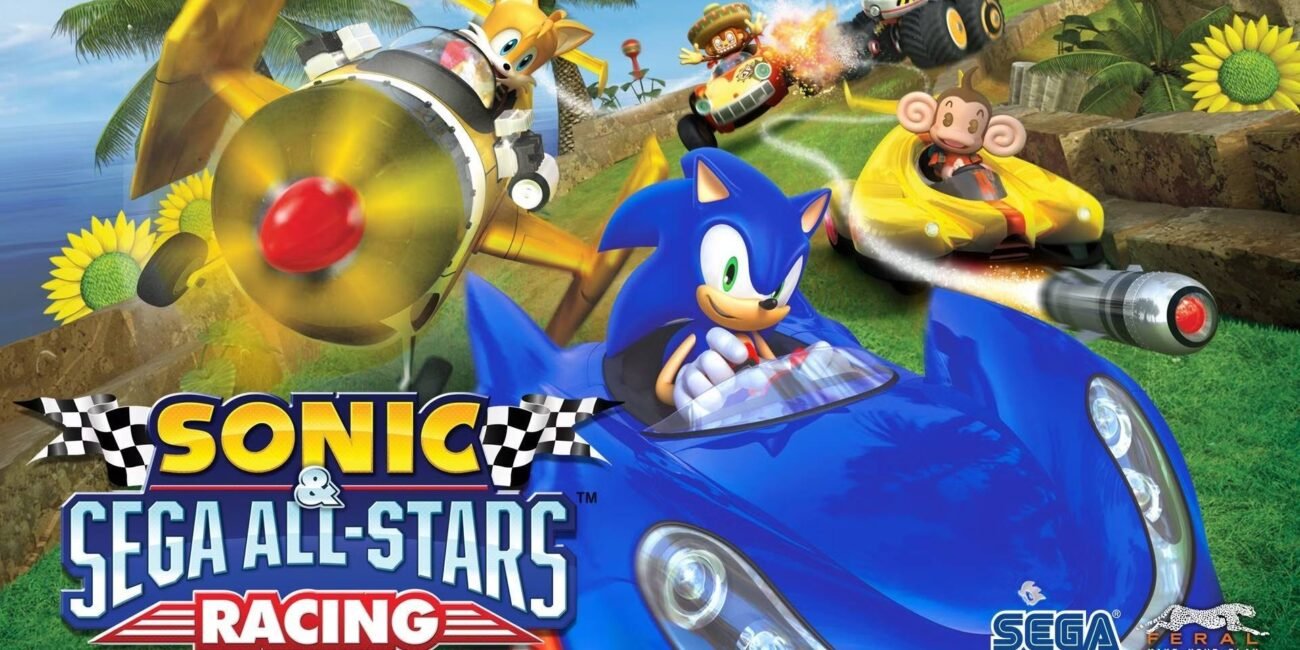
Sega’s answer to Mario Kart launched in 2010, and it came with a lineup that would make any veteran Sega fan do a double take. Sonic & Sega All-Stars Racing is a kart racer that mixes characters, tracks and music from across Sega’s history – from the Sonic the Hedgehog series to Super Monkey Ball, OutRun, Samba de Amigo and much more. Developed by Sumo Digital, the game didn’t just borrow the kart-racing format; it built something with its own identity, rooted in genuine Sega nostalgia.
The game arrived during an era when Sonic’s reputation was at a low point. Sonic the Hedgehog (2006) had eroded trust in the franchise, and while Sonic Unleashed showed flickers of recovery, fans were skeptical. Sonic & Sega All-Stars Racing turned out to be one of the cleanest surprises of that era — a focused, well-designed kart racer that didn’t overcomplicate itself or try to do too much.
This review covers everything you need to know: the full breakdown of gameplay mechanics, track design, All-Star abilities, single-player and multiplayer modes, platform-specific differences between the console, Wii, and DS versions, and a final verdict on where this game sits in the kart-racing genre.
Whether you’re a Sega fan revisiting a childhood favorite, a kart racing enthusiast comparing your options, or someone curious about how this compares to its sequel — Sonic & All-Stars Racing Transformed — this review covers all of it.
Game Overview & Background
How Did Sonic & Sega All-Stars Racing Come to Be?
Sumo Digital’s first significant crack at the Sega kart racing scene was Sonic & Sega All-Stars Racing, but the studio wasn’t entirely green, having released Sega Superstars Tennis in 2008. Both titles were launched by Sega as part of a larger drive to exploit their IP collection in party-style multiplayer formats.
The game premiered on February 23, 2010 in North America on Xbox 360, PlayStation 3, Wii, Nintendo DS, and PC simultaneously. The game was then ported to iOS and later as a standalone arcade game.
Who Is Playable in Sonic & Sega All-Stars Racing?
The base roster includes 20 playable characters drawn from across Sega’s history. These include:
- Sonic the Hedgehog franchise: Sonic, Tails, Knuckles, Amy, Shadow, and more
- Super Monkey Ball: AiAi
- Samba de Amigo: Amigo
- Billy Hatcher and the Giant Egg: Billy Hatcher
- Banjo-Kazooie (Xbox 360 exclusive DLC): Banjo & Kazooie
- Avatars (Xbox 360) and Metal Sonic (available via unlocking)
Each character drives a vehicle suited to their franchise — Sonic drives a red convertible, AiAi races in a modified Super Monkey Ball sphere, and Amigo uses a sombrero-inspired ride. The variety feels deliberate rather than cosmetic, which adds visual personality to races.
Gameplay Mechanics & Features
How Does the Core Kart Racing Feel in Sonic & Sega All-Stars Racing?
The driving mechanics found the sweet spot between approachable and technical. Steering is responsive without being twitchy, and drifting — the foundational skill of any kart racer — is satisfying to execute. Players hold the drift button through corners to build a boost charge, releasing it at the right moment for a speed burst. It’s a mechanic you will be familiar with, but Sumo Digital has fine-tuned it enough to make it rewarding to practice, not punishing to learn.
Speed stats differ considerably amongst characters. Larger characters, such as Big the Cat, have greater momentum and are tougher to lose control of, but smaller characters, such as Amy, have sharper handling on turns but are more vulnerable to item hits. The differences are there for casual gamers, but not by much. Competitive players will rapidly identify the fastest builds for time attack runs.
What Are the All-Star Moves, and How Do They Work?
Every character has a unique All-Star move — a temporary power boost triggered by collecting an All-Star item box, which appears on the track when a player falls behind. The mechanic is intentionally catch-up oriented: players in last place are most likely to receive the All-Star item.
Examples of All-Star moves include:
- Sonic: Transforms into Super Sonic, granting invincibility and dramatically increased speed for several seconds
- AiAi: The Super Monkey Ball sphere envelops the kart, rolling over competitors and deflecting items
- Amigo: Music blasts from the vehicle, disorienting nearby racers
The All-Star moves are one of the game’s most distinctive features. They’re visually exciting, franchise-appropriate, and add a genuine comeback mechanic for players who fall behind early. Unlike Mario Kart’s blue shell — which punishes leaders regardless of skill — the All-Star system targets the struggling player and gives them agency rather than lobbing punishment at the front.
What Tracks Are Included, and How Is the Track Design?
The game features 24 tracks across several Sega-themed cups. Tracks draw from specific Sega franchises and incorporate visual and mechanical elements from their source material:
- Seaside Hill (Sonic Heroes): Wide, coastal layout with boost pads and ramps. One of the most immediately recognizable tracks for Sonic fans.
- Roulette Road (Sonic the Hedgehog): Casino-themed with pinball bumpers and moving obstacles.
- Samba Studios (Samba de Amigo): Bright, music-video aesthetic with rhythm-inspired track dressing.
- Monkey Target (Super Monkey Ball): Aerial island layout with tight turns and elevation changes.
- Outrun Bay (OutRun): A coastal highway that directly references OutRun’s iconic Ferrari drive along the beachside roads.
Track variety is a genuine strength. Each course feels different — not just visually, but mechanically. Some tracks reward aggressive drifting; others prioritize item management and positioning. A few have environmental hazards tied to their source franchise, which adds a layer of franchise-specific texture beyond aesthetics.
What Single-Player and Multiplayer Modes Are Available?
Single-player modes include:
- Grand Prix: Four cups, each containing four races. Finishing positions earn points, and the highest scorer wins the cup.
- Time Attack: Solo racing against ghost data with online leaderboard integration.
- Mission Mode: Character-specific challenges including drift challenges, elimination races, and item-based tasks. Mission Mode adds meaningful single-player depth beyond Grand Prix.
- Battle Mode: Arena-based item combat in dedicated arenas.
Multiplayer supports up to four players locally on console and Wii, with split-screen races. Online multiplayer was available on Xbox 360, PS3, and PC at launch, featuring ranked races and leaderboards. Online servers have since been shut down for most versions, which is worth noting for modern players.
Graphics, Sound & Presentation
How Does Sonic & Sega All-Stars Racing Look Across Platforms?
The console version (Xbox 360 and PS3) will try to have a vibrant clean visual style that matches the franchise material. The character models are well-proportioned for kart racing, expressive, readable at speed and franchise-accurate. Track environments are vivid and detailed, with backdrop features animated to emphasize the illusion of a living, Sega-shaped world.
Console performance is locked at a steady 30 frames per second for the majority of racing scenarios, with small dips when there are lots of particle effects (especially in All-Star sequences with lots of characters involved). The game holds together well enough that these dips don’t hinder handling, but competitive players chasing quick laps will notice them.
The PC version operates at greater frame rates on competent hardware and benefits from resolution scaling beyond what console versions support. For gamers with a gaming PC, the Steam edition remains the best-looking method to play the original.
How Does the Wii Version Compare Visually?
The Wii version of Sonic & Sega All-Stars Racing is a competent downgrade. Texture resolution and backdrop detail are reduced relative to the console versions, which is expected given the hardware difference. Character models hold up quite well, and the visual character of each track remains distinct. The aliasing is more visible and the draw distances are shorter yet the game doesn’t look awful, just suitably toned down for what the Wii can handle without sliding below reasonable frame rates.
What the Wii version does add is motion control support. Players can utilize the Wii Wheel or a Wii Remote angled sideways for steering. It works in practice – it’s not the most accurate input technique for professional racing, but for casual family gaming it’s a perfect fit for the platform’s demographic.
How Does the DS Version Compare?
The Nintendo DS version is a separate, smaller-scale product. Track count is lowered, the roster is shortened, and the graphic presentation is a top-down perspective rather than the behind-the-kart third-person view utilized on all other platforms. It plays more like a typical top-down racer than a kart game in the Mario Kart sense.
As a portable Sega racing game for the DS it does the job and has enough franchise appeal to make it worth a playthrough for those who prefer the handheld. This isn’t a substitute for the console or Wii versions, and anyone looking for the full Sonic & Sega All-Stars Racing experience shouldn’t start here.
What Is the Music and Audio Design Like?
The soundtrack is one of the game’s most celebrated elements among Sega fans, and justifiably so. Each track uses remixed or reimagined music from its source franchise:
- Seaside Hill uses an energized remix of the Heroes theme
- Outrun Bay samples the iconic OutRun racing music
- Samba Studios incorporates Samba de Amigo’s percussion-heavy sound design
The music quality varies — some remixes are excellent, a few feel generic — but the overall soundtrack is lively, high-energy, and franchise-appropriate. Sound effects are punchy and readable during races, with character voice lines during item use that add personality without becoming repetitive.
Platform-Specific Comparisons
Which Version of Sonic & Sega All-Stars Racing Is the Best?
Console (Xbox 360 / PS3): The best experience. Best graphics, full roster, online multiplayer (at launch) and most complete feature set. For the two, the Xbox 360 version received the Banjo-Kazooie DLC, a notable exclusive for Rare fans. If you have access to any console version, this is the preferred way to play.
PC (Steam): The best current option for players without working console hardware. The game remains available on Steam, runs well on modern hardware, and benefits from resolution flexibility. Online functionality is limited for the original game, but single-player and local multiplayer work without issue.
Wii: A solid choice for family or casual play. Motion controls are a genuine addition for the right audience. The trade off of visuals and performance is decent and the whole core track collection is there. Not the best version, but a good one considering the platform’s strengths.
Nintendo DS: A separate, portable-focused product. Worth playing if you’re specifically looking for a DS racing game with Sega characters. Not a replacement for the main game.
Pros & Cons
What Are the Key Strengths of Sonic & Sega All-Stars Racing?
- Roster depth: 20+ characters from across Sega’s history, each with franchise-appropriate vehicles and All-Star moves
- Track design: 24 varied tracks that feel mechanically and visually distinct, not just reskinned versions of the same layout
- All-Star system: A catch-up mechanic that rewards the struggling player rather than punishing the leader
- Soundtrack: A strong collection of Sega music remixes that reward franchise knowledge
- Accessibility: Easy to pick up, with enough mechanical depth to reward practiced players
- Mission Mode: Adds single-player replayability beyond Grand Prix
What Are the Notable Drawbacks?
- Item balance: Some items feel underpowered relative to others, and the item distribution can feel inconsistent across races
- Online multiplayer: Servers are now offline for most versions, removing a significant feature
- AI difficulty scaling: The rubber-band AI in Grand Prix can feel punishing at higher difficulty tiers in ways that don’t always feel earned
- DS version: A significant step down from the console and Wii experience — separate enough that it warrants caution as a recommendation
- Short Grand Prix structure: Four cups of four races each clears quickly for experienced players
How Does Sonic & Sega All-Stars Racing Compare to Mario Kart?
And the comparison to Mario Kart Wii, the leading kart racer at the time of Sonic & Sega All-Stars Racing’s debut, is unavoidable and fair. Mario Kart Wii had a larger track library, a more refined item system, and the weight of a longer franchise history behind its design choices.
Sonic & Sega All-Stars Racing is narrower in scope but more focused in identity. The All-Star method is more engaging for catch-up play than the item distribution in Mario Kart Wii, and the Sega franchise fan service is denser and more specific. For Sega fans, the comparison isn’t really a contest — this game provides something Mario Kart structurally can’t.
For players with no particular Sega attachment, Mario Kart remains the better technical and content value. Sonic & Sega All-Stars Racing earns its place alongside it rather than replacing it.
Final Verdict & Score
Is Sonic & Sega All-Stars Racing Worth Playing?
Yes – especially for Sega aficionados and kart racing fans wanting a solid alternative to Mario Kart. Sumo Digital didn’t overstate its case. They built a tight, colorful kart racer that respects its source material and plays well across all player types.
The game is at its best as a local multiplayer experience. The All-Star concept makes races entertaining for mixed-skill groups, track variation keeps the Grand Prix from feeling repetitive, and the franchise-specific music and car designs reward Sega knowledge in ways that go beyond surface-level nostalgia.
Single-player mode holds up for completionists — Mission Mode in particular adds challenge and replayability — but the game is clearly designed around competitive play, local or online. Now with online servers being shut down on most platforms, the experience is mostly local, which is also going to influence how much replay value modern players will get out of it.
Who should play this game?
- Sega fans: The franchise representation alone makes this worth playing. The tracks, music, and roster choices are made by people who understand the source material.
- Kart racing fans: A solid, well-tuned genre entry that holds up mechanically. The All-Star system is worth experiencing if you haven’t.
- Families and casual players: Easy to pick up, fun in local multiplayer, and visually friendly across all age groups. The Wii version is a natural fit.
- Competitive or online-focused players: The online infrastructure is gone. Factor that into your expectations before purchasing.
What About Sonic & All-Stars Racing Transformed?
Sonic & All-Stars Racing Transformed (2012) is an almost complete overhaul of this game, changing vehicles between car, boat and plane, adding extra tracks, tweaking the item system and increasing online functioning on launch. If you’re picking between the two, Transformed is the stronger game overall. But the original is worth playing first – it sets up the franchise’s identity, plus the Sega character lineup in the original features some fan faves that didn’t return in the sequel.
Final Score
8 / 10
A focused, well-crafted kart racer with genuine Sega franchise depth, a smart catch-up mechanic, and strong track variety. The lack of functioning online servers and a smaller content library than Mario Kart keep it from the top tier, but Sonic & Sega All-Stars Racing remains one of the best licensed kart racers of its generation.
Frequently Asked Questions
What is Sonic & Sega All-Stars Racing?
Sonic & Sega All-Stars Racing is a kart racing game developed by Sumo Digital and published by Sega in 2010. It features a roster of Sega characters including Sonic, Tails, AiAi, Amigo, and others, racing across tracks themed around Sega franchises. Each character has a unique All-Star move triggered by collecting a special item during a race.
How many characters are in Sonic & Sega All-Stars Racing?
The base game includes 20 playable characters. Additional characters were available as DLC or platform exclusives — most notably Banjo & Kazooie on Xbox 360. Characters span multiple Sega franchises including Sonic the Hedgehog, Super Monkey Ball, Samba de Amigo, Billy Hatcher, and others.
How does Sonic & Sega All-Stars Racing compare to Sonic & All-Stars Racing Transformed?
Sonic & All-Stars Racing Transformed (2012) is the stronger game overall, featuring vehicle transformation between car, boat, and plane modes, a larger track list, and an improved item system. The original has a slightly different roster that includes characters like Amigo who don’t appear in Transformed. For first-time players, Transformed is the recommended entry point; the original is best experienced as franchise history or completionist content.
Is the Wii version of Sonic & Sega All-Stars Racing worth playing?
Yes, the Wii version of Sonic & Sega All-Stars Racing is a solid option for players on that platform. It includes motion control support via the Wii Wheel and covers the core track list and roster. Visual quality is lower than the console versions, but the gameplay is functionally equivalent for casual and family play. It is not the best version, but it is a good one.
What is the Nintendo DS version of Sonic & Sega All-Stars Racing like?
The DS version is a scaled-down, top-down racing game rather than a behind-the-kart experience. It has a reduced track count and a trimmed roster. It works as a portable Sega racing game but is not representative of the full console experience. Players expecting Mario Kart DS-style gameplay in a Sega skin will find it passable; players expecting the full Sonic & Sega All-Stars Racing experience will be disappointed.
Can you still play Sonic & Sega All-Stars Racing online?
Online multiplayer servers for the original Sonic & Sega All-Stars Racing have been shut down across most platforms. Local multiplayer for up to four players remains fully functional on console and PC. Players looking for online kart racing should consider Sonic & All-Stars Racing Transformed instead, as third-party communities have kept some online activity alive for that title.
How do you unlock all characters in Sonic & Sega All-Stars Racing?
Most characters are unlocked by completing Grand Prix cups and earning enough points. Some characters, including Metal Sonic, require completing specific Mission Mode challenges or reaching point thresholds in Grand Prix on higher difficulty settings. The full unlock list varies slightly by platform.
Are there any tips for beginners playing Sonic & Sega All-Stars Racing for the first time?
Three tips for new players: First, practice drifting on the first two tracks of any cup before attempting higher difficulty Grand Prix — drifting is the single most impactful skill to develop. Second, use your All-Star move as soon as you collect it rather than holding it; the timing window is generous, and saving it rarely leads to a better outcome. Third, in Mission Mode, read the objective carefully before starting — many missions have specific conditions (item-only damage, no item use) that aren’t obvious from the mission name.
Does Sonic & Sega All-Stars Racing have DLC?
Yes. The most notable DLC is the Banjo-Kazooie pack for Xbox 360, which adds Banjo & Kazooie as a playable character with a franchise-specific vehicle and All-Star move. This DLC was an Xbox 360 exclusive and is not available on other platforms. The Xbox 360 version with this DLC is therefore the most content-complete version of the original game.
A Kart Racer That Earns Its Place
Sonic & Sega All-Stars Racing arrived at a moment when Sonic’s reputation needed a win, and Sumo Digital provided something clean and confident. The game doesn’t reinvent kart racing. What it does is execute the format wisely — with a roster that rewards Sega franchise knowledge, tracks that feel fundamentally distinct rather than cosmetically diversified, and an All-Star system that makes losing spots fascinating rather than punishing.
If you haven’t played it, the PC version on Steam is still the most accessible way to do that today. If you compare the original to Sonic & All-Stars Racing Transformed, Transformed is the better complete package. But the original is worth your time in its own right.
For aficionados of Sega’s history, this is one of the most endearing franchise crossovers the firm has released. That’s something.

Other Articles
Jump Super Stars English ROM: Full DS Review & Patch Guide