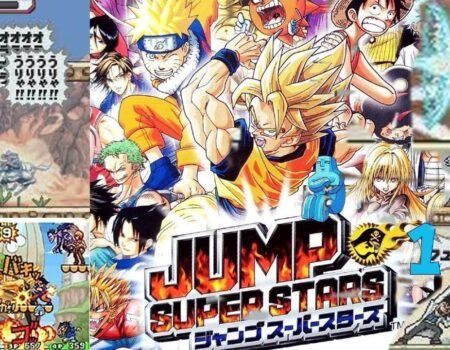


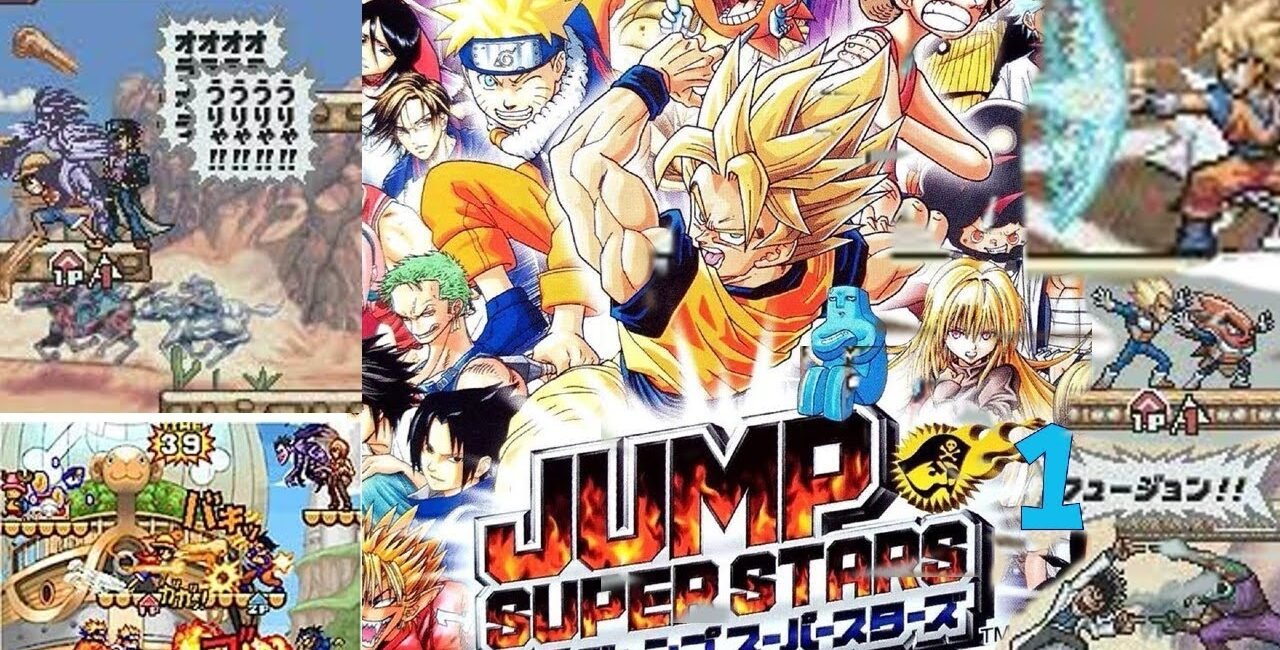
Jump Super Stars English ROM is a 2005 fighting game for the Nintendo DS, which features characters from the Weekly Shōnen Jump manga. It never saw an official release outside Japan, but a fan-made English patch translates menus, character names and plot information. This tutorial covers gameplay, the Koma Panel system, the whole roster, how the English patch works, and how to legally get the game in 2024.
Game Details at a Glance
| Detail | Info |
|---|---|
| Title | Jump Super Stars (ジャンプスーパースターズ) |
| Platform | Nintendo DS |
| Developer | Ganbarion |
| Publisher | Nintendo |
| Genre | 2D Platform Fighter |
| Original Release Date | August 8, 2005 (Japan only) |
| Players | 1–4 (local wireless multiplayer) |
| Rating | Not rated outside Japan (CERO: A in Japan) |
| English Patch | Available via fan translation |
| ROM Context | This review is editorial in nature and does not host or link to ROM files |
What Is the Jump Super Stars English ROM?
Jump Super Stars English ROM is a Nintendo DS 2D platform fighter published only in Japan on August 8, 2005. Developed by Ganbarion and published by Nintendo, the game pulls characters from dozens of Weekly Shōnen Jump manga titles — Dragon Ball, Naruto, One Piece, Bleach, and many more — and pits them against each other in frantic multi-panel battles.
The “Jump Super Stars English ROM” refers to a version of the game’s ROM file modified with a fan-made English patch. This patch translates the game’s Japanese menus, story mode text, and character information into English, making the game significantly more accessible to players outside Japan who could never navigate the original’s Japanese interface.
Jump Super Stars English ROM was never properly localized for western territories. The reasons are well-documented: licensing arrangements for the dozens of manga titles covered in the roster would have needed separate talks with individual rights holders across North American, European, and Australian markets. Nintendo and Jump’s publisher, Shueisha, elected not to pursue that marketing attempt. The result is a game that hundreds of thousands of Western Shonen Jump fans have wanted to play for almost two decades — and still can’t buy thru any legal digital channels.
The English patch is the only way most non-Japanese gamers have ever enjoyed Jump Super Stars English ROM fully. This guide covers the game itself, what the patch changes, how it compares to its sequel, and everything you need to make an informed decision about how to approach it.
Why Jump Super Stars Was Never Officially Released in English
The core problem was the complexity of licensing. Jump Super Stars English ROM started with characters from 27 distinct manga series. Each franchise – Dragon Ball, Naruto, One Piece, Bleach, Yu-Gi-Oh!, Hunter x Hunter, and more – has its own publishing and licensing deals outside Japan. Shueisha controlled these properties domestically, but their Western distribution involved Viz Media, Funimation, and multiple other rights holders with their own contract structures.
A simultaneous multi-market localization would have meant coordinating dozens of licensing agreements across different companies and regions at the same time. In 2005, the Western market for DS games based on Japanese manga properties was commercially uncertain. Naruto and Bleach had growing anime audiences in North America, but the broader Shōnen Jump brand recognition that made the game an easy sell in Japan did not yet have the same commercial weight outside Asia.
Nintendo, as publisher, decided that the license cost and effort did not worth the commercial return. That calculus proved out to be faulty, in retrospect – the demand has been continuous for nearly 20 years, as indicated by sustained search interest in the “jump super stars english ROM” inquiry. But by the time the Western market for anime-adjacent games evolved, the franchise had moved on to Jump Ultimate Stars (2006) and eventually the Jump Force console game (2019), neither of which spanned the gap that Jump Super Stars English ROM left.
This is why the fan-made English patch is so important to the history of this game, there was never an official English release. It is the only version that Western audiences can meaningfully play.
Gameplay Mechanics — How Does Jump Super Stars Play?
Jump Super Stars English ROM is a 2D platform fighter in the vein of Super Smash Bros., but with design priorities that reflect both its handheld format and its manga source material. Battles take place on flat levels with platform features, and the objective is to knock opponents off the screen or deplete their health across timed or stock-based battle styles.
Combat is quick, graphically chaotic, and purposely trimmed down from dedicated console combatants. Each character has a light attack, a strong attack, and a set of special moves drawn from their respective manga. Naruto throws shadow clones. Goku powers up with variations of the Kamehameha. Luffy stretches across the screen with Gum-Gum attacks. The move sets are illustrative rather than extensive and each character evokes the spirit of their fighting style without the input complexity of a dedicated fighting game.
What separates Jump Super Stars English ROM from generic platform fighters is the Koma Panel system, which fundamentally changes how you approach every match. That system is covered in detail below.
The DS hardware is used practically throughout. The bottom screen shows your Koma deck and battle interface, while the top screen shows the fight itself. Touch controls are used to manage your panel deck between battles, though not during active combat. The split-screen setup is intuitive once you understand the panel system, and Ganbarion’s use of both screens reflects a genuine engagement with the DS’s capabilities rather than a cosmetic use of the touchscreen.
The Koma Panel System Explained
The defining mechanical contribution of Jump Super Stars English ROM and the thing that most sets it apart from other platform fighters is the Koma Panel system. You have to understand it to comprehend the game.”
Players create a “Koma deck” – a grid of panels that determines what characters appear, and how strong they are, before each battle. Each character exists as one or more Koma (panels) in different sizes: 1-Koma, 2-Koma, and 3-Koma configurations. In the larger panels, the character is completely playable, and more strong. Smaller panels provide support abilities rather than direct fighting slots.
Here is how the three panel sizes function:
- 1-Koma (Support): The character appears briefly to provide a passive bonus — stat boosts, health recovery, or situational defensive buffs. These are not playable characters; they activate automatically under specific conditions.
- 2-Koma (Help): The character appears as a call-in assist, similar to tag-team mechanics in other fighting games. Players trigger them during battle for a brief attack or support action.
- 3-Koma (Battle): The character is fully playable with a complete move set, their own health bar, and the ability to be selected as your primary fighter.
The grid is a finite number of slots, so there’s a trade-off for every deck. The more spaces occupied by 3-Koma fighting characters, the less space there is for support panels, and vise versa. A deck heavy on 3-Koma fighters gives you more combat options, but a well-constructed support arrangement can provide advantages that offset character power differences.
That’s the system that provides Jump Super Stars English ROM with its replay value. With a big enough roster and enough possibilities for Koma sizes, building the optimum deck is a real strategic conundrum. Different match types , different opponents , different personal play styles .
Roster and Franchise Coverage
Jump Super Stars English ROM launched with characters from 27 manga series, spread across battle, help, and support roles. Not every franchise receives equal treatment — some provide only support Koma while others have multiple playable 3-Koma versions representing different power states or story arcs.
Featured franchises include:
- Dragon Ball / Dragon Ball Z
- Naruto
- One Piece
- Bleach
- Yu-Gi-Oh!
- Hunter x Hunter
- Prince of Tennis
- Bobobo-bo Bo-bobo
- Slam Dunk
- Rurouni Kenshin (Samurai X)
- KochiKame
- JoJo’s Bizarre Adventure
- Dr. Slump
- Jigoku Sensei Nūbē
- Hikaru no Go
- And approximately 12 additional series
The franchises are those that had a major presence in the history of Weekly Shōnen Jump from the 1980s to the early 2000s, and the 2005 lineup is a reflection of the magazine’s line-up at the period of development. More newer titles – One Piece, Naruto, Bleach – have more generous character representation with various Koma possibilities and full playable lineups. Smaller panel roles include older programs such as Rurouni Kenshin and Slam Dunk.
For Western audiences, the recognizable franchises are the main draw. Dragon Ball, Naruto, One Piece, and Bleach were all active in Western markets through Viz Media and Funimation at the time of the game’s Japanese launch. Fans of those franchises who picked up Jump Super Stars English ROM will find the lineup instantly satisfying — and perhaps rediscover earlier Jump series they’d never known before.
The English Patch — What It Changes and How It Works
The Jump Super Stars English ROM is a fan-made ROM hack that replaces the game’s Japanese text with English translations. Understanding what the patch does — and what it does not do — sets accurate expectations before you use it.
What the English patch translates:
- Main menus, mode select screens, and navigation text
- Story mode dialogue and mission descriptions
- Character names and Koma panel labels
- Help text, tutorial explanations, and in-game tips
- Battle mode options and settings menus
What the patch does not change:
- Voice acting (all character voices remain in Japanese — this is consistent with the game’s identity and most players consider it appropriate)
- Character move names (these are displayed in Japanese in the original and remain partially or fully in Japanese depending on patch version)
- General gameplay code, balancing, or content
The patch is applied to a ROM file using a patching program — generally Lunar IPS or a similar IPS patch application. The process involves taking the original Japanese ROM, applying the patch file to create a modified ROM, and running the result through a DS emulator. The patch does not change any hardware or physical cartridge. Physical DS cartridges cannot be patched without dedicated hardware flashers, which is a different process outside the scope of this guide.
Patch versions: There are a number of English patch versions, from incomplete translations that merely cover menus to more extensive translations that cover story mode text. The most extensive patch available as of this writing translates the majority of the game’s navigable text. Minor untranslated strings remain in some secondary menus, but they do not obstruct core gameplay.
The English patch transforms Jump Super Stars English ROM from “technically playable through menu memorization” to genuinely accessible. Story mode, in particular, becomes a proper game experience rather than a navigation puzzle once you can read the mission text and objectives.
Jump Super Stars vs. Jump Ultimate Stars English ROM Comparison
Jump Super Stars English ROM received a sequel in 2006: Jump Ultimate Stars, also for Nintendo DS and also Japan-exclusive. Understanding the differences between the two games clarifies which is better suited to different players — and why the English patch distinction matters for search terms.
| Feature | Jump Super Stars | Jump Ultimate Stars |
|---|---|---|
| Release Year | 2005 | 2006 |
| Franchise Count | 27 series | 41 series |
| Total Koma Count | ~300 | ~400+ |
| Story Mode | Yes | Yes (expanded) |
| English Patch Quality | Solid — most menus and story text | More complete — widely considered the better-translated version |
| Roster Depth | Strong for 2005 | Larger, includes newer Jump series |
| Recommended For | Original experience, smaller franchise scope | More content, better patch quality |
Jump Ultimate Stars is the larger, more polished game. Its English patch is usually considered more thorough, and its roster expansion brings in additional franchises that were either absent from or underrepresented in Jump Super Stars English ROM. For players choosing between the two, Jump Ultimate Stars is the stronger recommendation on content alone.
Jump Super Stars, however, retains the original. It introduced the Koma system, set the framework for Ultimate Stars, and has its own personality as the game that started the series. Players who want the foundational experience — or who are specifically interested in the game that launched the franchise — have clear reasons to start with Jump Super Stars rather than jumping directly to its sequel.
Practical search difference “jump super stars rom english patch” and “jump ultimate stars english ROM” are different games with different patches. The English patches are not interchangeable and the search terms are not equivalent, but there is a significant overlap in the audience.
Graphics, Art Style, and Presentation
Jump Super Stars English ROM is quite a looker for a DS game of 2005, and the art direction is a big part of why it stands up. Ganbarion used character sprites taken straight from the manga art — the visual style is cel-shaded and panel-influenced, with characters that look like they came straight from the printed page rather than out of a 3D model.
Battle sprites are detailed for the DS hardware. Character animations capture signature poses and movements from the source material — Goku’s fighting stance, Naruto’s run animation, Luffy’s elastic stretch attacks. The animation frame counts are modest compared to console fighters, but the quality of the keyframes is outstanding, and the cel-shaded design forgives limited animation with strong visual clarity.
Stage backgrounds scroll and animate with greater variation than often provided by the DS. Certain levels include interactive or breakable elements, and the backgrounds are inspired by famous locations from the franchises they represent. The visual language is consistent: this is a manga-influenced game that embraces its source material’s look rather than attempting photo-realistic replication.
The English patch has clean, readable text rendering. The patch does not distort menus or introduce visual artifacts into the interface — the translated text occupies the same space as the original Japanese characters, and the overall presentation remains visually coherent.
Sound and Soundtrack
Jump Super Stars English ROM has an energetic, serviceable soundtrack that complements its fast-paced, visually dense battle system. Tracks are short loops that repeat across match durations, which becomes noticeable in extended play sessions but is consistent with the DS library’s general audio approach.
Voice acting is pulled from each franchise’s Japanese cast. Characters shout attack names, react to hits, and generate the characteristic audio cues their followers will immediately recognize. Having the right Japanese voice actors – Masako Nozawa as Goku, Junko Takeuchi as Naruto – helps the move from manga to voiced battle game, and that authenticity holds up fairly well.
English patch does not change sound. All of the voice lines and battle cries and character sound effects are Japanese, as is technically expected and artistically appropriate. Western fans of these franchises are familiar with Japanese voice acting through the original anime, and the Japanese audio is part of what makes character recognition immediate.
Menu audio and UI sound design are clear and responsive, with distinct audio feedback for Koma selection, menu navigation, and battle events. The overall audio experience is great for the platform, even if the soundtrack lacks the memorable individual tunes of the best DS game compositions.
Multiplayer
Jump Super Stars English ROM supports local wireless multiplayer for up to four players, which was the DS’s normal wireless mode in 2005. Each player uses their own DS unit, and the game enables complete roster access for all participants – no constraints based on which Koma decks players have obtained in story mode.
Multiplayer is where Jump Super Stars English ROM reaches its competitive ceiling. The Koma deck system takes on additional strategic weight when facing human opponents who can adapt and counter your character selections. Games between experienced players are just as much deck-building contests as they are moment-to-moment tests of combat.
The four-player format makes for a controlled chaos that matches the visual esthetic of the game. Four characters from four different franchises clashing on a single screen, with help Koma activating mid-fight, is exactly the kind of spectacle the game promises and delivers.
Emulation note: Local wireless multiplayer is difficult to replicate in standard DS emulation. melonDS supports local wireless emulation between multiple instances on the same PC or over LAN, although technically it is possible, it requires configuration. For most gamers utilizing an emulator, Jump Super Stars English ROM will mostly be a single-player experience. Multiplayer functionality is still fully functional for players with original DS hardware and multiple cartridges.
Pros and Cons
What Jump Super Stars Does Well
- The Koma Panel system is a genuinely original contribution to the platform fighter genre, adding strategic deck-building depth that significantly extends replay value
- Roster breadth across 27 franchises delivers on its premise — fan service that functions as actual game design rather than cosmetic character swapping
- Visual fidelity to source material is impressive, with sprites that honor the original manga art styles across radically different visual traditions
- Fast, accessible combat is well-calibrated for handheld sessions — matches are short enough for portable play but deep enough for extended competitive use
- The English patch transforms the game from a navigation puzzle into a fully accessible experience without compromising visual or audio integrity
Where the Game Shows Its Limits
- Move set depth is limited per character — the simplification necessary to accommodate a 27-franchise roster means no individual character has the move set complexity of a dedicated fighting game
- Story mode is thin compared to the roster’s potential — the narrative framing is minimal, and story mode functions primarily as an unlock mechanism rather than a genuine campaign
- Unlocking system requires repetition — accessing the full roster demands significant story mode completion, which can feel grindy before the full multiplayer potential is available
- No official English release means the game exists only through fan patching and secondhand cartridge acquisition, limiting accessibility to players comfortable with those methods
- Jump Ultimate Stars is the better game by almost every metric — larger roster, more complete English patch, more content — which positions Jump Super Stars English ROM primarily as the foundational experience rather than the definitive one
Who Should Play Jump Super Stars?
Jump Super Stars English ROM is the game you want if you want the original experience that set the Jump DS fighting game formula, have an affinity for the specific roster of manga franchises that the 2005 line up consists of, and would rather have the smaller, more focused game instead of the expanded but busier Jump Ultimate Stars.
If you’re a fan of Dragon Ball, Naruto, One Piece or Bleach above all else, you’ll find the greatest immediate value here, since these titles get the most thorough Koma representation, with several playable 3-Koma versions and well-developed support options.
Players that seek maximal material, the most full English patch, and a wider franchise list should go directly to Jump Ultimate Stars instead. As you can see, then, Jump Super Stars English ROM is a solid game, while Jump Ultimate Stars is the better version of the same idea.
Emulation and Modern Access
Jump Super Stars English ROM has never been available on any digital storefront. No official re-release, port, or remaster exists. The game’s Japan-only status and licensing complexity mean a commercial digital release is unlikely without a significant commercial arrangement between Nintendo, Shueisha, and the individual franchise rights holders.
Legal ways to access Jump Super Stars English ROM:
- Purchase an original Japanese DS cartridge through verified secondhand marketplaces — eBay, Mercari, and dedicated retro game stores carry copies at varying prices. Expect to pay between $30 and $70 USD for a complete cartridge depending on condition and seller
- Dump a ROM from a personally owned cartridge using dedicated hardware such as a Flashcard or ROM dumping device — the legality of this process varies by jurisdiction and is distinct from downloading pre-made ROM files
- Nintendo DS flashcards allow original hardware owners to run ROM files from an owned cartridge legally — this approach preserves the physical DS experience including hardware multiplayer support
This guide does not host, link to, or endorse ROM file downloads of Jump Super Stars or any other title. The discussion of emulation here applies strictly to players using ROM files dumped from personally owned cartridges.
For emulation from an owned ROM, melonDS is the recommended DS emulator for Jump Super Stars English ROM. The game runs cleanly on current melonDS builds with no significant emulation-breaking issues. DeSmuME is a stable alternative with additional features like save states and playback speed adjustment. Both emulators handle the game’s DS hardware use accurately, including the dual-screen layout and touchscreen Koma management interface.
Final Score and Verdict
Jump Super Stars: 8/10
Jump Super Stars English ROM is a focused, well-designed platform fighter that is a success on its own terms. The Koma Panel system is the game’s lasting addition to handheld fighting games – a mechanic that validates the game’s existence independently of its crossover roster. The manga art esthetic stands up. The combat is fun. And with the English patch deployed, the game is completely available to non-Japanese players in a way that does honor to what Ganbarion designed.
Its successor, Jump Ultimate Stars, is the better game by roster size, content depth, and patch quality. But Jump Super Stars is where the concept was proven. Players who engage with it on those terms — as the original, the foundational version, the game that made Ultimate Stars possible — will find it well worth their time.
If you’re looking for the Jump Super Stars rom English patch experience, the short version is this: the game is great, the English patch makes it really playable, and Jump Ultimate Stars is there if you want more of everything thereafter.
Frequently Asked Questions
What is the Jump Super Stars English ROM?
The Jump Super Stars English ROM is a version of the game’s ROM file modified with a fan-made English patch. Because Jump Super Stars was released exclusively in Japan, no official English version exists. The English patch translates menus, story mode text, character names, and navigation into English, making the game accessible to non-Japanese players. This guide does not host or link to ROM files.
Does Jump Super Stars have an official English release?
No. Jump Super Stars was never officially released outside Japan. Licensing complexity across the game’s 27 manga franchises prevented Nintendo and Shueisha from pursuing a Western localization in 2005. No digital port, remaster, or official translation has been released since. The English patch is a fan-made translation and represents the only English version of the game available.
What does the Jump Super Stars English Rom translate?
The English patch translates main menus, mode select screens, story mode dialogue and mission text, character panel labels, tutorial text, and navigation menus. It does not change voice acting (which remains in Japanese), general gameplay code, or balance. Multiple patch versions exist with varying levels of completeness — the most comprehensive available patches cover the majority of the game’s text.
Is Jump Super Stars or Jump Ultimate Stars the better game?
Jump Ultimate Stars (2006) is generally considered the stronger game. It features 41 manga franchises versus 27, a larger Koma count, expanded story mode content, and a more complete English patch. For players choosing between the two, Jump Ultimate Stars is the recommended starting point. Jump Super Stars remains the original and is worth playing for its own merits, but Ultimate Stars surpasses it in nearly every measurable category.
How many characters are in Jump Super Stars?
Jump Super Stars features characters from 27 Weekly Shōnen Jump manga series across battle (3-Koma), help (2-Koma), and support (1-Koma) roles. The total Koma count is approximately 300, though the number of fully playable battle characters is smaller. Franchises including Dragon Ball, Naruto, One Piece, and Bleach have the most complete representation with multiple playable 3-Koma options.
What emulators can run Jump Super Stars?
Jump Super Stars runs reliably on both melonDS and DeSmuME when using a ROM file dumped from a personally owned cartridge. melonDS is generally recommended for its accurate DS hardware emulation and clean performance on modern systems. DeSmuME provides additional features such as save states and speed adjustment. Neither emulator requires configuration changes to run Jump Super Stars correctly. This guide does not host or link to ROM files.
Can Jump Super Stars be played on modern hardware?
Jump Super Stars can be played on original Nintendo DS, DS Lite, DSi, and Nintendo 3DS hardware in DS backwards-compatibility mode. For emulation from an owned ROM, the game runs on PC through melonDS or DeSmuME. No official port exists for modern consoles or digital platforms.
What is the Koma Panel system in Jump Super Stars?
The Koma Panel system is Jump Super Stars’ core deck-building mechanic. Before each match, players assemble a grid of character panels (Koma) in three sizes: 1-Koma (support bonuses), 2-Koma (call-in assist characters), and 3-Koma (fully playable battle characters). The grid has limited slots, requiring players to balance playable fighters against support options. Different deck configurations favor different playstyles and opponents, making deck construction a central strategic element of the game.
Why was Jump Super Stars never released in English?
The primary reason was licensing complexity. Each of the game’s 27 manga franchises required separate licensing agreements for Western markets, involving multiple rights holders including Viz Media and Funimation. Nintendo calculated in 2005 that coordinating those agreements across multiple markets was not commercially justified. The Western market for manga-based games has grown significantly since then, but by the time commercial conditions improved, the franchise had moved on to Jump Ultimate Stars and eventually Jump Force.

Other Articles

Sonic & Sega All-Stars Racing Review: Is It Worth Playing?
MySims DS: Review, Game Overview & Legal Access Guide