




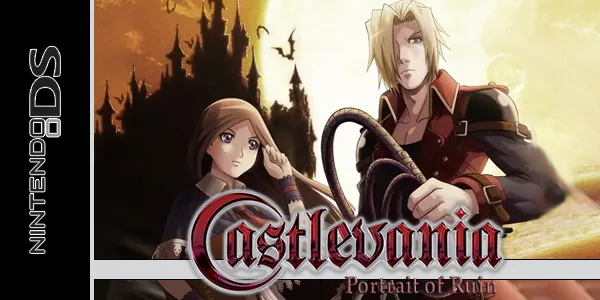
TL;DR: Castlevania: Portrait of Ruin DS is a dual-character action-platformer for the Nintendo DS released in 2006. It takes place in World War II, in Dracula’s Castle. This walkthrough covers every major region — City of Haze, Sandy Grave, Forest of Doom, Nation of Fools, 13th Street, and Nest of Evil — plus boss strategies, quest completion, map exploration, and suggestions for attaining 100% completion with Jonathan Morris and Charlotte Aulin.
Castlevania Portrait of Ruin DS doesn’t ease you in. From the moment you step into Dracula’s Castle as Jonathan Morris and Charlotte Aulin, the game demands that you master its systems — dual-character switching, portrait worlds, subweapon synergies — before it gives you anything approximating breathing room. Miss a mechanic early and you’ll hit a wall fast. Get it right, and Castlevania Portrait of Ruin DS becomes one of the most rewarding episodes in the whole Castlevania series.
This guide is built for players who want complete coverage: first-time runs, boss strategies, quest completions, and the map exploration required for 100%. Whether you’re stuck on a specific area, farming a boss, or pushing for full completion before tackling the Nest of Evil, everything you need is here.
The keyword cluster for this guide – “castlevania portrait of ruin ds walkthrough,” “city of haze portrait of ruin,” “13th street map portrait of ruin,” and “castlevania portrait of ruin DS quests” – shows the spectrum of inquiries this post answers. Work through it linearly or jump to the section you need.
you can safely buy Castlevania Portrait of Ruin DS.
Game Overview: What Is Castlevania Portrait of Ruin DS?
Castlevania: Portrait of Ruin ds is a video game developed by Konami and was released on December 5, 2006 in North America for the Nintendo DS. The game sits within the “Igavania” tradition — the Metroidvania-style Castlevania games produced under series producer Koji Igarashi — and follows Castlevania: Dawn of Sorrow (2005) as the second DS entry in that lineage.
The story takes place in 1944 in the middle of World War II. Dracula’s Castle has been restored by the vampire twins Stella and Loretta, who are using the castle and its picture worlds to amass the energy of the war dead and complete Dracula’s resurrection. Jonathan Morris, son of John Morris, the whip-wielding hero of Castlevania: Bloodlines, comes at the castle with formidable young mage Charlotte Aulin. Jonathan carries the legendary Vampire Killer whip, though he cannot yet wield its full power — a central tension that drives both the gameplay progression and the story.
The dual-character system defines Castlevania Portrait of Ruin DS identity. Jonathan is a physical fighter relying on subweapons and the whip; Charlotte is a spellcaster with access to a broad grimoire of magic. Players switch between them freely, use cooperative attacks, and position Charlotte to support Jonathan in combat. Every efficient run is based on mastering the interaction between the two characters.
Getting Started — Early Game Tips and Controls for Castlevania: Portrait of Ruin DS
Before the first portrait world opens, Castlevania Portrait of Ruin DS gives you the castle’s entrance and connecting corridors to learn the controls. Don’t rush through this section.
Core controls to internalize early:
- Jonathan/Charlotte switch: Tap the partner portrait on the touchscreen or press Select to switch the active character.
- Dual Crash: Hold L and press attack to execute a cooperative attack that consumes MP. These deal significant damage and are essential for bosses.
- Subweapon system: Jonathan equips subweapons (axe, cross, knife, holy water) alongside his whip. Subweapons consume Hearts, not MP.
- Charlotte’s spellbook: Charlotte attacks with a book in melee range but her power lies in elemental and status magic. Prioritize unlocking new spells early.
- Partner commands: While one character is active, the other follows and can be directed to hold position, attack, or guard.
Early game priorities:
- Collect as many Hearts as possible — Jonathan’s subweapons become critical in boss fights.
- Level Charlotte’s INT stat through kills and equipment. Her magic damage scales heavily with INT.
- Explore the castle entrance area fully before entering the first portrait. Hidden rooms in the main castle often contain equipment that makes early portraits significantly easier.
- Talk to Wind (the spirit who instructs Jonathan) at every available opportunity. His dialogue unlocks crucial progression items.
Castlevania Portrait of Ruin DS Walkthrough by Area
How Do You Complete the City of Haze in Portrait of Ruin?
The City of Haze is the initial portrait planet and serves as the training stage for the portrait system in Castlevania Portrait of Ruin DS. The painting is in the entrance area of the castle. Jonathan and Charlotte enter, and they find themselves in a sun-drenched European cityscape fraught with great danger.
Key objectives in the City of Haze:
- Locate the Portrait Exit at the far right of the zone to unlock fast travel back to the castle.
- Find the Tower of Death sub-area within the City of Haze, which contains the zone’s primary boss.
- Collect the Strength Potion hidden in the lower section — it permanently boosts Jonathan’s STR by 1 and is easily missed on a first run.
City of Haze boss — Stella: Stella uses ice attacks and is very fast around the arena. Stay mobile, use Charlotte’s fire magic (Fire Whip or Fireball) to exploit the elemental weakness, and avoid standing directly beneath her aerial dives. The encounter includes a narrative wrinkle – inflicting enough damage prompts a retreat rather than a defeat. You will come back.
Exploration note: City of Haze has about 15% of it’s map hidden behind breakable walls. Bring up the Tackle subskill (unlocked from Wind) to see these areas. Missing them significantly impacts map completion percentage.
How Do You Navigate Sandy Grave in Castlevania Portrait of Ruin DS?
Sandy Grave introduces environmental hazards — quicksand currents that drag characters downward — alongside a heavier emphasis on Charlotte’s utility magic. The portrait is located in the castle’s upper-left corridor after returning from the City of Haze.
Sandy Grave key points:
- The quicksand sections require Charlotte’s Float ability or careful jump timing. Rushing through them drains HP faster than most enemies in the zone.
- Skeleton Blaze enemies here drop the Spear subweapon reliably — worth farming if Jonathan’s subweapon loadout needs variety.
- The sub-area Pyramid contains two separate boss encounters gating deeper map completion.
Sandy Grave boss — Astarte: The most mechanically notable early-game boss is Astarte. She will try to seduce Jonathan, to turn him against Charlotte. When Jonathan is charmed, swap to Charlotte as the active character instantly. Charlotte is not to be bewitched. Deal damage to Astarte until the charm breaks, then alternate. Equipping the Talisman accessory before entering blocks the charm totally – strongly advised on first attempts.
Sandy Grave boss — Dullahan: Found deeper in the Pyramid sub-area. Dullahan splits his head from his body; target the body to cause serious damage, as the head regenerates HP passively when not engaged. Charlotte’s Holy-type magic deals bonus damage to both components.
How Do You Clear Forest of Doom in Castlevania Portrait of Ruin DS?
Forest of Doom is the largest of the early portrait worlds and the first area where navigation genuinely challenges players. The dense vertical layout, combined with enemies that inflict Curse (blocking subweapon use), makes it one of the more punishing zones on an underprepared first run.
Forest of Doom key points:
- Curse-inflicting enemies are concentrated in the lower sections. Bring Uncurse Potions or equip the Antidote Plate armor, which provides Curse resistance.
- The Treant enemy type drops the Timber Suit — one of the better mid-game armor options for Charlotte at this stage. Farm it if you see the drop.
- The zone’s vertical structure hides several rooms accessible only through high jump or double jump mechanics acquired elsewhere. Mark these on your map for a return visit.
Forest of Doom boss — Dagon: An aquatic boss in an unlikely forest setting. Dagon moves between water and land phases, dealing heavy physical damage in the land phase. Charlotte’s Thunder magic is the exploitable weakness. Stay at mid-range during the water phase and close during land phase transitions.
How Do You Complete Nation of Fools in Castlevania Portrait of Ruin DS?
Nation of Fools is a carnival-themed portrait world that disorients with visual noise and enemy variety before delivering two of the game’s more memorable boss encounters. It becomes accessible after the Sandy Grave sequence.
Nation of Fools key points:
- The carnival aesthetic masks tight platforming sections. The carousel rooms require precise jump timing across moving platforms — Charlotte’s slower jump arc makes Jonathan the better character to control through these sections.
- The zone contains the Joker enemy, which drops rare equipment with relatively high probability compared to other zones. Prioritize killing Jokers whenever encountered.
- A hidden room in the upper-right section contains a stat-boosting item that is permanently missable if you complete the zone boss without finding it.
Nation of Fools boss — Mummy Man: A straightforward physical boss. High HP pool, low elemental resistance. Focus Dual Crash attacks during the opening phase to build damage quickly, then maintain consistent subweapon pressure.
Nation of Fools boss — Amalaric Sniper: A long-range focused boss requiring aggressive positioning to counter. Rush to close range immediately — the Sniper’s ranged attacks deal significantly less damage at melee distance. Jonathan’s whip reach at close range outpaces Charlotte’s magic casting time here.
How Do You Navigate 13th Street in Castlevania Portrait of Ruin DS?
13th Street is the portrait world that consistently generates the most search traffic — specifically around map completion — and for good reason. Its two-story urban layout packs more hidden rooms per square meter than any other area in the game.
13th Street map guide:
The 13th Street portrait world is organized across two primary floors connected by staircases and breakable floors. The upper floor contains primarily aerial enemies; the lower floor packs heavier physical enemies and the zone’s sub-areas. A full map reveals approximately 18 distinct rooms, of which six are hidden behind environmental barriers.
- Breakable floor locations: Three floors in the mid-section of the lower level open into otherwise inaccessible sub-rooms containing equipment and a Heart Max Up.
- Hidden wall locations: Two walls in the upper corridor’s eastern section conceal rooms that contribute to map completion percentage. Neither room contains enemies — both contain collectibles.
- Sub-area access: The 13th Street sub-area entrance sits in the lower-left corner of the map, requiring the High Jump ability from Jonathan to reach. This sub-area contains the zone boss.
13th Street boss — Werewolf: Fast, aggressive physical attacker. The Werewolf’s horizontal rush attack covers the full arena width; jump over it cleanly or take significant damage. Charlotte’s Ice magic slows his movement speed meaningfully. After the first phase, the Werewolf gains a vertical leap attack — maintain mid-arena positioning to avoid cornering.
How Do You Survive the Nest of Evil in Castlevania Portrait of Ruin DS?
The Nest of Evil is Castlevania Portrait of Ruin DS optional super-dungeon — accessible only after completing the main story — and the hardest content in the game. No maps are available inside the Nest of Evil. Every room is new, every enemy is a powered-up variant, and the bosses are remixed versions of the most challenging encounters in the main game.
Nest of Evil preparation checklist:
- Jonathan and Charlotte should be at minimum Level 60 before entering. Level 70+ is strongly recommended for first attempts.
- Jonathan needs the Vampire Killer fully powered and at least three mastered subweapons.
- Charlotte should have Holy Word, Sanctuary, and Meteorite mastered and available.
- Bring 20+ High Potions and 10+ Uncurse Potions.
- Equip the Duplicator accessory if available — it removes item consumption, making healing effectively unlimited.
Nest of Evil navigation: The dungeon progresses through a fixed sequence of rooms despite its apparent randomness. Boss rooms appear at intervals of approximately 10 to 12 rooms. Conserve MP between boss rooms — Dual Crash consumption adds up quickly across a full run.
Final Nest of Evil boss — Legion Reborn: The most technically demanding fight in Portrait of Ruin. Legion Reborn has a circular exterior shell of bound bodies surrounding its core. Break sections of the exterior systematically — Charlotte’s wide-radius magic clears multiple exterior segments simultaneously — then target the exposed core. The core retaliates with a multi-directional beam attack during the exposed phase. Stay in constant motion and use Holy Word to maximize damage on the exposed core window.
Boss Guides: Strategies for Castlevania Portrait of Ruin’s Hardest Fights
| Boss | Location | Weakness | Key Strategy |
|---|---|---|---|
| Stella | City of Haze | Fire | Stay mobile, use fire spells |
| Loretta | City of Haze (return) | Thunder | Interrupt spell casts with subweapons |
| Astarte | Sandy Grave | Holy | Equip Talisman, switch to Charlotte when charmed |
| Dullahan | Sandy Grave Pyramid | Holy | Target body, not head |
| Dagon | Forest of Doom | Thunder | Exploit water/land phase transitions |
| Werewolf | 13th Street | Ice | Jump rush attacks, maintain mid-arena |
| Mummy Man | Nation of Fools | Fire | Dual Crash opening, consistent subweapon pressure |
| Legion Reborn | Nest of Evil | Holy | Clear exterior methodically, Charlotte AoE |
| Death | Castle | Holy, Strike | Destroy scythes first, then engage directly |
| Dracula | Castle Pinnacle | Holy | Two phases; second phase requires Vampire Killer finisher |
Defeating Death: Death appears as a late-game castle boss and remains one of the series’ most iconic encounters. His scythes orbit in patterns that can be anticipated — count the rotation cycles and move through gaps rather than attempting to destroy them all simultaneously. Jonathan’s Holy Cross subweapon deals splash damage to multiple scythes at once, accelerating the opening phase. In the second phase, Death accelerates his scythe patterns and adds a direct dash attack. Charlotte’s High Potion spell sustains HP during extended fights; don’t exhaust it before this encounter.
Defeating Dracula: The final boss fight is two-phased. Phase one is a test of subweapon management — Dracula teleports between attacks and punishes predictable positioning. Phase two requires the Vampire Killer to land the finishing blow; no other weapon or spell can kill Dracula outright. Ensure Jonathan has Hearts available for the Cross subweapon before entering, and keep Charlotte alive for healing support throughout.
Quest Completion Guide for Castlevania Portrait of Ruin
Quests are assigned by Wind and by the Wind’s sister Richter (unlocked via specific story progression). Completing quests earns SP (Skill Points) used to master subweapons and unlock joint techniques. Full quest completion is required for 100% game records.
Quest categories:
- Hunting quests: Defeat a specified number of a particular enemy type. These are the most time-consuming category and best completed during natural exploration rather than dedicated farming sessions.
- Collection quests: Deliver a specific item to Wind. Most required items drop from enemies in predictable zones — cross-reference the enemy drop list before dedicated farming.
- Boss quests: Defeat a named boss within a time limit or under specific conditions. These unlock after the standard boss kill and require a second encounter.
- Character mastery quests: Reach a specified mastery level with Jonathan’s subweapons or Charlotte’s spell categories. These unlock automatically through normal play but can be accelerated by focusing on underused weapon types.
Quest completion priority order for efficiency:
- Complete all hunting quests during portrait world exploration — don’t backtrack for them.
- Hold collection quests until you have the required item; check your inventory before leaving each zone.
- Attempt boss quests immediately after the story encounter — enemy stats are consistent and you know the fight patterns.
- Mastery quests: Charlotte’s magic mastery is the slowest and should be actively managed from the mid-game onward.
Map Completion and Exploration Tips for Portrait of Ruin
Reaching 200.6% map completion (the game’s listed maximum, accounting for the castle and all portrait worlds) requires thorough exploration of every zone, including the Nest of Evil.
Map completion tips:
- Use the Tackle skill proactively. Many walls look identical to breakable ones. In doubt, tackle it. The skill costs nothing and reveals hidden rooms that contribute to map percentage.
- Return to early areas after unlocking Jonathan’s High Jump and Charlotte’s Float. Several rooms in City of Haze, Sandy Grave, and Forest of Doom require these abilities to access and are unreachable on first visit.
- The Master’s Keep sub-area in the main castle is commonly missed. It’s accessed from the Throne Room corridor via a hidden door on the right wall, not through any portrait.
- Nest of Evil counts toward map percentage. Every room discovered in the Nest of Evil contributes. This is the primary reason players can reach 200.6% — the Nest adds meaningful map percentage unavailable in a first playthrough.
Jonathan and Charlotte Abilities — Complete Character Guide
What Are Jonathan Morris’s Best Abilities and Subweapons?
Jonathan’s combat identity rests on his subweapon mastery system. Every subweapon has a mastery level from 1 to 9; higher mastery increases damage output and unlocks passive bonuses. Prioritize mastering these subweapons:
- Holy Cross: High damage, wide splash radius, exploits enemy weaknesses to Holy. The most consistently useful subweapon across all zones.
- Javelin: Exceptional single-target damage per Heart spent. Best against bosses with low mobility.
- Axe: Arc trajectory hits flying enemies and enemies on elevated platforms — useful specifically in zones like Forest of Doom.
- Holy Water: Area denial that synergizes with Charlotte’s area spells. Creates a fire pool that persists for several seconds.
Jonathan’s joint abilities with Charlotte — the Dual Crash techniques — scale with both characters’ mastery levels. Investing in the Holy Cross and Charlotte’s Holy-type magic creates a synergy that outputs the highest combined damage in the game.
What Are Charlotte Aulin’s Best Spells in Portrait of Ruin?
Charlotte’s grimoire expands throughout the game as she levels mastery in different magic categories. Key spells for each game phase:
Early game: Fireball, Thunder Bolt (exploit elemental weaknesses in portrait worlds)
Mid game: Stone Eye (petrify), High Potion (healing), Fire Whip (joint attack with Jonathan)
Late game/Nest of Evil: Sanctuary (party heal), Holy Word (massive Holy damage, slow cast), Meteorite (highest raw damage output)
Charlotte’s INT stat directly multiplies all spell damage. Every INT-boosting equipment piece is worth prioritizing for Charlotte’s loadout, even at the cost of DEF in mid-game.
Tips for 100% Completion in Castlevania Portrait of Ruin DS
Reaching 100% in Portrait of Ruin’s completion records requires finishing map exploration, quest completion, enemy records (encountering every enemy type), and item collection.
100% completion checklist:
- 200.6% map completion across all zones including Nest of Evil
- All quests completed and turned in to Wind
- All enemy types recorded in the enemy compendium (requires encountering, not necessarily defeating, every enemy)
- All items collected at least once (check the item compendium for gaps)
- All joint techniques mastered
- Richter mode unlocked (complete the story, then access via title screen)
- Sisters mode unlocked (complete specific quest conditions before the Stella/Loretta boss fights)
The most commonly missed 100% elements:
- Toad enemy in Forest of Doom: Required for the enemy compendium but located in a single hidden room most players never find. It sits in a breakable-floor sub-room in the lower-left of the Forest of Doom map.
- Bridal Gown item: Charlotte-exclusive equipment that drops from Succubus enemies in the castle’s Clock Tower area. Low drop rate; budget farming time for this item.
- Sisters Mode quests: Playing through the Sisters Mode unlocks unique quest dialogue. These quests do not share progress with the main Jonathan/Charlotte quest log.
Frequently Asked Questions About the Castlevania Portrait of Ruin Walkthrough
How many areas are in Castlevania: Portrait of Ruin?
Castlevania: Portrait of Ruin DS contains six portrait worlds — City of Haze, Sandy Grave, Forest of Doom, Nation of Fools, 13th Street, and the Great Stairway — plus the main castle and the optional Nest of Evil post-game dungeon. Each portrait world contains at least one sub-area with its own boss encounter. The main castle includes the Tower of Death, Master’s Keep, Throne Room, and Clock Tower as distinct sub-areas.
What is the best order to complete the portrait worlds in Castlevania Portrait of Ruin DS?
The recommended order for first-time players is: City of Haze → Sandy Grave → Forest of Doom → Nation of Fools → 13th Street → Great Stairway. This sequence follows the game’s intended difficulty curve. The Great Stairway serves as the bridge back to the main castle’s upper sections and the final stretch before Dracula.
How do you unlock the Nest of Evil in Castlevania Portrait of Ruin DS?
The Nest of Evil becomes accessible after completing the main story and defeating Dracula. Its entrance is in the castle’s basement area, marked by a painting that does not activate during the main game. You must complete the game at least once on any difficulty setting to unlock it.
What level should you be before fighting Dracula in Castlevania Portrait of Ruin DS?
A comfortable level for first-time Dracula encounters is Level 50 to 55. Players who have completed all quests and explored the portrait worlds thoroughly typically reach this level naturally before the final approach. If you’re below Level 45 when reaching the Throne Room, consider returning to 13th Street or Nation of Fools for additional leveling.
How do you get the best ending in Castlevania Portrait of Ruin DS?
The best ending requires completing the Eric Lecarde quest line in full before the Stella and Loretta boss fight. Wind will provide a specific item that must be equipped and used during the encounter rather than defeating Stella and Loretta outright. Failing to meet this condition locks you into a secondary ending and prevents the Sisters Mode unlock.
Can Charlotte be used as the primary fighter in Castlevania Portrait of Ruin DS?
Yes, but with caveats. Charlotte deals significantly higher damage than Jonathan against elemental-vulnerable enemies due to spell scaling with INT. However, her melee range and survivability are lower. Many experienced players run Charlotte as primary in portrait worlds where elemental weaknesses are known and consistent, then switch to Jonathan for the Nest of Evil and late-game boss fights where physical damage output and subweapon flexibility become more valuable.
What is the Duplicator accessory and how do you get it in Castlevania Portrait of Ruin DS?
The Duplicator is an accessory that removes item consumption — using a potion no longer depletes it from inventory. It’s obtained by completing a specific late-game quest from Wind that requires delivering a rare drop item from the Nest of Evil. Because the Duplicator requires Nest of Evil progression to unlock, it’s a reward for players already deep into post-game content rather than a first-run tool.
Finishing the Castle — What to Do After You Beat Castlevania Portrait of Ruin DS
Completing Castlevania: Portrait of Ruin DS story opens a significant amount of post-game content that extends the total playtime considerably. The Nest of Evil is the obvious endpoint, but full completion also involves Richter Mode (a Jonathan-only hard mode unlocked via title screen after story completion), Sisters Mode (playing as Stella and Loretta), and the Old Axe Armor Mode.
Each alternate mode uses the same map and enemy set but changes the character roster, available abilities, and damage calculations. Sisters Mode in particular offers the sharpest difficulty spike — Stella and Loretta have limited move sets relative to Jonathan and Charlotte, and the Nest of Evil in Sisters Mode is among the hardest content Konami has shipped in any handheld Castlevania title.
For players targeting 100% completion records, the post-game content is not optional. All modes contribute to the completion percentage displayed on the save file, and finishing all of them with full quest and map completion represents the complete Portrait of Ruin experience.
The portrait walkthrough, boss strategies, and quest guide above cover everything needed to reach that endpoint. Work through each area methodically, return to earlier zones when new abilities unlock, and the 200.6% map and full quest log will follow.