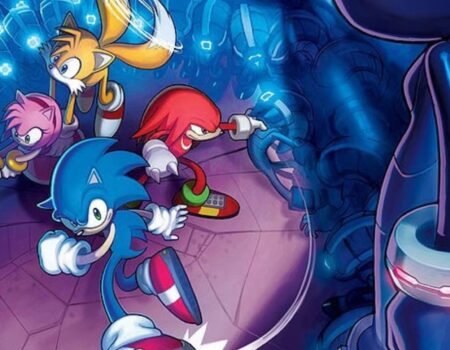


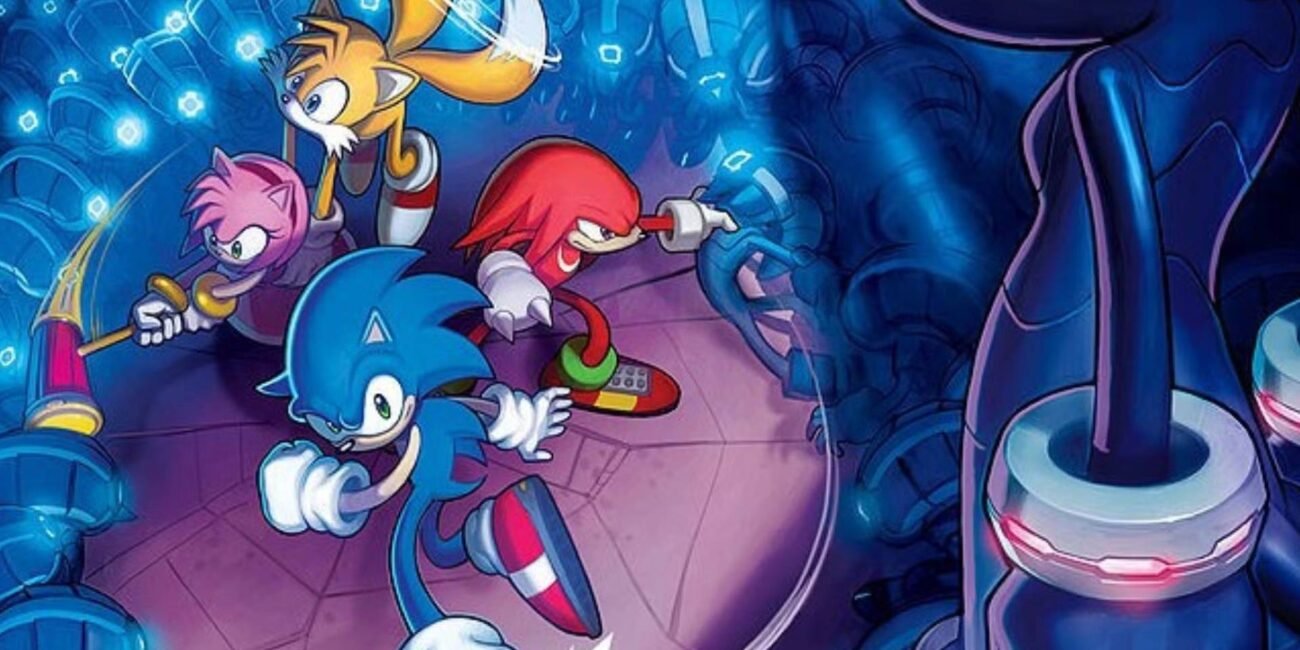
TL;DR: Sonic Chronicles: The Dark Brotherhood, a turn-based RPG from BioWare and distributed by Sega, was released for the Nintendo DS on September 30, 2008. This review discusses its combat system, character advancement, story, emulation context, and how it stacks up against other DS RPGs – all that Sonic fans and RPG gamers need to know before exploring this odd corner of the genre.
Game Details at a Glance
| Detail | Info |
|---|---|
| Title | Sonic Chronicles: The Dark Brotherhood |
| Platform | Nintendo DS |
| Developer | BioWare |
| Publisher | Sega |
| Genre | Role-Playing Game (RPG) |
| Original Release Date | September 30, 2008 (North America) |
| Players | 1 (single-player campaign) |
| Rating | E10+ (Everyone 10+) |
| ROM Context | This review is editorial in nature and does not host or link to ROM files |
Why Sonic Chronicles: The Dark Brotherhood Still Matters
There are not many games in the Sonic franchise that are as genuinely surprising as Sonic Chronicles: The Dark Brotherhood. Not surprising because it was spectacular — but because of what it attempted. BioWare, the studio behind Star Wars: Knights of the Old Republic and Mass Effect, built a Sonic RPG for the Nintendo DS. That sentence alone is enough to stop most Sonic fans in their tracks.
Sonic Chronicles, released in September 2008, finds itself at a strange crossroads in gaming history. The Sonic series was still finding its feet after the mixed reception of Sonic the Hedgehog (2006), and handing the keys to BioWare was a bold experiment. What emerged was a turn-based RPG that leaned into character relationships, team strategy, and narrative complexity — all things the Sonic series had rarely prioritized.
Searches for “Sonic Chronicles The Dark Brotherhood DS ROM” reflect an audience that either grew up with the game and wants to revisit it, or discovered it through gaming history discussions and wants to see for themselves what a BioWare-developed Sonic title actually looks and plays like. This review exists to serve both groups: a thorough, honest editorial assessment of the game’s mechanics, story, strengths, weaknesses, and emulation context.
The SERP for this keyword is dominated by ROM repositories, Amazon listings, and brief Reddit threads. None of them offer what this game really needs – a critical review. Sonic Chronicles is not a forgotten masterpiece. But it is a genuinely interesting artifact of the franchise, and it holds up far better than its reputation suggests.
Game Overview & Development
What Is Sonic Chronicles: The Dark Brotherhood?
Sonic Chronicles: The Dark Brotherhood is the first, and so far only, Sonic RPG made by a Western studio. BioWare, then riding the wave of critical success from Mass Effect, took the project on as a commission from Sega. The result was a DS title that mashed up typical RPG elements with the cast and mythology already established in the Sonic universe.
Set after the events of Sonic the Hedgehog (2006) and Sonic and the Secret Rings, Sonic returns from an adventure to find Knuckles missing and the Chaos Emeralds stolen. The investigation brings Sonic and a growing team of franchise characters into a confrontation with the Marauders, a mysterious alien civilization with designs on Earth.
Within the Sonic franchise timeline, Sonic Chronicles occupies an interesting position. It was launched during a period when Sega was aggressively experimenting with diverse gameplay approaches across multiple Sonic titles. That same year, Sonic Unleashed was released with a focus on speed and action. Sonic Chronicles went the other way – methodical, tactical, dialogue-heavy.
How Did BioWare Approach Developing a Sonic RPG?
BioWare’s fingerprints are obvious throughout Sonic Chronicles in ways that go beyond the studio’s logo in the credits. There’s also a morality-adjacent conversation system, where Sonic’s responses can influence his relationships with other characters. The story builds toward a climactic confrontation, and is split into several chapters.
Ken Penders, the former Archie Comics writer for Sonic, later sued Sega and BioWare alleging that characters in Sonic Chronicles were ripped off from his Archie Comics work – specifically the Nocturnus Clan. The lawsuit was settled in 2013, and while the legal outcome did not result in a formal ruling on the infringement claim, the litigation is widely cited as the primary reason Sonic Chronicles has never received a sequel, re-release, or digital port. This legal history is crucial to comprehending why the game is unavailable on any official digital platforms.
Gameplay Mechanics Deep Dive
How Does the Turn-Based Combat System Work in Sonic Chronicles?
Combat in Sonic Chronicles: The Dark Brotherhood is the game’s most divisive element — and the most important to understand before forming an opinion. Players build a team of four characters from the franchise’s roster and engage enemies in turn-based battles that unfold across both DS screens.
Each character has a set of POW Moves (the game’s equivalent of special abilities), which are activated through touchscreen-based minigames. Tapping, drawing circles, slashing across the screen — each POW Move has a specific gesture associated with it, and executing the gesture correctly during the attack determines the move’s effectiveness. A successful activation deals full damage or triggers additional effects. Failing the gesture reduces the move’s impact.
This touchscreen mechanic is genuinely clever and keeps combat from feeling passive. Standard turn-based RPGs risk becoming rhythmic button presses during routine encounters — Sonic Chronicles avoids that by requiring active participation in every meaningful attack.
Key combat mechanics:
- POW Moves: Character-specific abilities activated through touchscreen gestures. Each character has multiple unlockable POW Moves that scale with level progression
- Team POW Moves: Combo attacks triggered when specific character combinations are on the same team. These deal significantly higher damage than individual POW Moves and reward intentional team composition
- Rings as currency and HP: Rings serve dual functions — they act as the game’s currency for purchasing items and upgrades, and losing all rings in combat causes a game over state, a direct callback to Sonic’s traditional ring-based health system
- Elemental affinities: Enemies have weaknesses and resistances to different damage types. Building a team that covers multiple damage elements is essential for later encounters
How Does Character Progression Work in Sonic Chronicles?
Characters collect experience from battle and level up to enhance base stats in categories including speed, power, defense and luck. Each level-up offers a fixed stat boost, but players can customize further through equipment – rings, armor, and accessories that affect attributes and sometimes grant elemental resistances.
The advancement system is approachable, but not superficial. BioWare made it approachable for people who had never played an RPG before (a likely segment of the Sonic audience), but still offered enough customization options for veterans of the genre to customize their favorite builds.
The playable roster includes:
Sonic, Tails, Knuckles, Amy, Rouge, Shadow, Cream, Big the Cat, E-123 Omega and others recruited throughout the story. Each character has a distinct stat distribution and POW Move set that enables true gameplay differentiation. Shadow is a high damage specialist. Tails provides utility and ranging support. In late-game fights, where enemy damage output can spike dramatically, the healing potential of cream becomes increasingly relevant.
How Does Exploration Work in Sonic Chronicles?
Between battles, players navigate overworld maps from a top-down perspective, moving Sonic and his party through environments that recall the Sonic universe’s signature zones — forests, ancient ruins, futuristic cities, and alien landscapes.
Exploration features light puzzle elements, hidden items and environmental interactions. In keeping with the game’s greater focus to DS hardware involvement, the touchscreen is used to interact with items and characters in the world. The area designs vary enough across the many chapters in the game to avoid any sense of monotony, but the pace of movement in the exploration sections is remarkably slow for a speed-based franchise.
That intentional pacing is worth noticing. Sonic Chronicles does not attempt to match the speed of mainline Sonic titles – it makes no pretense of being a fast game. Players who approach it expecting a classic Sonic experience will be immediately disoriented. Players who accept it as a BioWare RPG that happens to star Sonic will find the adventure genuinely fun.
What Are the Strengths and Weaknesses of the Combat Design?
Strengths:
- The touchscreen POW Move system creates active engagement that prevents combat from feeling automatic
- Team POW Moves reward strategic roster building with satisfying visual payoff
- The ring-based health mechanic is a clever bridge between RPG conventions and Sonic’s series identity
Weaknesses:
- The POW Move touchscreen gestures become repetitive in extended play sessions
- Enemy variety in the game’s first half is limited, which reduces the strategic challenge until later chapters
- The difficulty curve is uneven — some early chapters are notably easier than isolated mid-game encounters that spike significantly
Story & Narrative
What Is the Story of Sonic Chronicles: The Dark Brotherhood?
Sonic Chronicles begins with Sonic coming home to find Knuckles missing and the Chaos Emeralds taken. The plot begins with this mystery, and then extends to include the Marauders, who are revealed to be the Nocturnus Clan, an ancient echidna society that was transferred to a dark dimension called the Twilight Cage thousands of years ago. Their return is a threat to Earth, and Sonic’s team must follow them into the Cage to stop the invasion.
The plot is a departure in ambition from other Sonic game tales, both in breadth and its willingness to explore the franchise’s mythos. BioWare used the known lore of the Sonic universe, like the history of the echidna tribe and the origins of the Chaos Emeralds, to build a plot that seems like a part of the larger series, instead of a self-contained one.
Without going into spoilers, the ending is the most talked about and hotly debated part of Sonic Chronicles’ story. The last act and its climax divided gamers at launch and continue to provoke discussion in Sonic groups. The arrangement is strong. The extent to which the delivery matches it is heavily reliant on expectations – players who have seen BioWare’s narrative work on other platforms will probably enjoy what the company tried, even if execution is limited by the DS format.
How Is Character Development Handled in Sonic Chronicles?
BioWare’s fingerprints are all over the way Sonic Chronicles handles its cast. Characters have views. They bicker. They convey authentic reactions to plot events. Sonic himself is more self-aware and sardonic than in most mainline Sonic titles, and the dialogue choices available to players allow some expression of his personality rather than a fixed characterization.
The connection system — where Sonic’s conversation choices affect how individuals interact to him and, in some cases, which skills they unlock — is a lightweight version of the companion systems BioWare developed into their console RPGs. It is less developed here than in Knights of the Old Republic or Dragon Age, but its presence is meaningful. Sonic Chronicles is one of the rare Sonic games where the supporting characters of the franchise feel like individuals instead of plot devices.
How Does the Story Compare to Other Sonic Games?
Sonic Chronicles walks a fine line between the lighter narrative style of classic-era Sonic games and the more dramatic storyline of Sonic Adventure 2 or Shadow the Hedgehog. It takes the universe seriously enough to spin a real mythology around the Nocturnus Clan and yet keep the franchise’s trademark brightness in the day-to-day interactions of the characters.
For those who admired the worldbuilding of the Adventure series and the Archie Comics extended universe, Sonic Chronicles offers the most logical narrative expansion of that mythology in any official Sonic game. The idea of the Twilight Cage, the hierarchy of the Nocturnus Clan, and the political elements established throughout the course of the 10 chapters of the game are all true creative contributions to the lore of the Sonic universe.
Emulation & Accessibility
What Is the Legal Context Around the Sonic Chronicles DS ROM?
Sonic Chronicles: The Dark Brotherhood is no longer available through any official retail outlet. Sega has not issued a digital edition, a remaster, or a port — and the Ken Penders lawsuit and subsequent settlement are the most often cited reasons for this absence. Digimon World DS is distributed by Bandai Namco, and Sonic Chronicles by Sega, but the practical fact is that both are DS-era games that have no legitimate digital storefront presence.
The legal stance on DS ROMs is simple . It is copyright infringement in most countries to download ROM files of games you do not own . The game’s absence from digital storefronts does not change that. Sega holds intellectual property rights for Sonic Chronicles regardless of its retail availability.
Legal ways to access Sonic Chronicles:
- Purchase an original Nintendo DS cartridge through verified secondhand marketplaces such as eBay, Mercari, or dedicated retro gaming stores
- Dump a ROM from a personally owned cartridge using dedicated hardware — the legality of this practice varies by jurisdiction and remains a gray area distinct from downloading pre-made ROM files
- Monitor Sega’s digital catalog, as the company has made efforts to expand retro availability through Steam and other platforms, though no announcement has been made regarding Sonic Chronicles as of this writing
This review does not host, link to, or endorse ROM files for Sonic Chronicles: The Dark Brotherhood or any other title. All content here is editorial.
How Do Modern Emulators Handle Sonic Chronicles?
Players that dump Sonic Chronicles from a personally owned cartridge can run it with DeSmuME or melonDS, the two popular DS emulators. Sonic Chronicles runs successfully on both platforms, no major emulation-breaking problems detected in typical gameplay.
melonDS is often recommended on newer hardware, as it has more faithful emulation of the DS hardware and performance benefits on systems without discrete GPUs. DeSmuME has a lot more features such as save states and speed controls which makes it handy for gamers replaying material rather than playing the game for the first time.
Technical considerations for emulation from an owned cartridge:
- The touchscreen POW Move system translates naturally to mouse input on desktop setups, though a stylus-enabled tablet input provides a more authentic experience
- The game runs at native DS resolution (256×192 per screen), which appears small on modern displays. Integer scaling at 3x or 4x maintains pixel sharpness without distortion
- Audio emulation in DeSmuME can introduce minor crackling in some configurations — adjusting the audio sync settings resolves this in most cases
Pros & Cons
What Does Sonic Chronicles: The Dark Brotherhood Do Well?
- BioWare’s narrative craft: The story is the most ambitious in any handheld Sonic title, with character relationships and a mythology that treats the franchise’s universe with genuine seriousness
- Touchscreen POW Move system: The gesture-based activation mechanic creates active engagement during combat that prevents battles from becoming passive
- Team composition depth: The roster of playable characters with distinct stats and Team POW Move combinations rewards intentional team building
- Accessible RPG entry point: The difficulty and mechanics are calibrated for players new to RPGs without sacrificing all strategic depth
- Dialogue and characterization: Supporting characters feel distinct and reactive in ways rare for the Sonic franchise
Where Does the Game Fall Short?
- Pacing in the first act: The opening chapters are slow to introduce meaningful strategic challenge, which can mislead players into thinking the game is simpler than it becomes
- Repetitive POW Move gestures: The touchscreen minigames lose novelty in extended sessions, particularly for characters with limited POW Move variety
- Graphics constraints: The DS hardware limits environmental detail and character animation — the game looks serviceable but never impressive even by 2008 DS standards
- Audio quality: The soundtrack has been widely criticized since launch. The compressed DS audio and compositional choices feel disconnected from the franchise’s iconic musical identity
- No sequel, no port: The legal situation means this game will likely never receive the updated re-release it deserves, leaving players with limited official access options
Sonic Chronicles vs. Other DS RPGs
How Does Sonic Chronicles Compare to Digimon World DS and Similar Franchise RPGs?The Nintendo DS library features numerous franchise RPGs that attempted to adapt non-RPG properties into turn-based formats — Digimon World DS (2006), the Pokémon Mystery Dungeon series, and Mario & Luigi: Bowser’s Inside Story (2009) among them.
Sonic Chronicles sits closest in spirit to Digimon World DS. Both games take franchises primarily associated with action gameplay and rebuild them as accessible RPGs for a handheld audience. Digimon World DS focuses on creature collecting and breeding depth and its lasting appeal is found in the DigiFarm and DigiEgg systems that offer hundreds of hours of optimization content. Sonic Chronicles takes that same design energy and applies it to narrative and character relationships instead of systems depth.
Choose Sonic Chronicles if: You seek a character-driven story, adore the Sonic franchise’s extensive cast, and appreciate BioWare’s narrative approach in an approachable format. The game rewards players who engage with its narrative and team-building rather than speeding through combat.
Choose Digimon World DS if: Long-term systems depth and creature optimization are your priority. Digimon World DS offers significantly more post-story content through DigiEgg breeding and complete roster collection, making it the stronger choice for players who want hundreds of hours of gameplay from a single title.
Mario & Luigi: Bowser’s Inside Story outdoes both in terms of cleverness of battle and humor. It’s the gold standard for franchise RPG design from the DS period. Sonic Chronicles competes with Digimon World DS more closely than it does with Mario & Luigi, which operates at a higher level of mechanical polish.
What Makes Sonic Chronicles Unique Among DS RPGs?
The BioWare pedigree is Sonic Chronicles’ only real distinguishing feature. No other DS RPG came from a studio with BioWare’s particular experience crafting companion-heavy, dialogue-heavy story games. The result is a franchise RPG that emphasizes character over systems—a rare focus in a library where most DS RPGs compete on technical depth.
The Nocturnus Clan storyline also offers a unique instance of actual worldbuilding within an official Sonic title, drawing on mythology and ancient history in ways that the mainline series rarely explored before or since.
Frequently Asked Questions: Sonic Chronicles: The Dark Brotherhood
What is Sonic Chronicles: The Dark Brotherhood about?
Sonic Chronicles: The Dark Brotherhood is a turn-based role-playing game that has Sonic assembling a team of franchise characters to look into the theft of the Chaos Emeralds and the disappearance of Knuckles. The research leads to a battle with the Nocturnus Clan, an ancient society of echidnas exiled to a dark dimension called the Twilight Cage, who intend to return to Earth and conquer it. The game is divided into ten chapters in different locations and ends with Sonic’s crew entering the Twilight Cage to stop the invasion.
Who developed Sonic Chronicles: The Dark Brotherhood?
Sonic Chronicles: The Dark Brotherhood was developed by BioWare and published by Sega. BioWare — known at the time for Star Wars: Knights of the Old Republic and Mass Effect — built the game as a commission from Sega for the Nintendo DS platform.
Why has Sonic Chronicles never been re-released or remastered?
The main reason Sonic Chronicles hasn’t been re-released is the legal battle between Sega, BioWare and former Archie Comics writer Ken Penders. Penders sued, alleging that the Nocturnus Clan characters in Sonic Chronicles were based on his work for Archie Comics. The lawsuit was settled in 2013. While there has been no official infringement ruling, the legal morass surrounding the game’s characters has rendered a commercial re-release or digital port essentially unfeasible at the time of this writing.
Is Sonic Chronicles: The Dark Brotherhood a good game?
Sonic Chronicles is a nice game with some definite limits. The story and characters are actually quite impressive for a handheld game, and the BioWare-influenced dialog system gives more personality to the cast of the Sonic franchise than almost any other official Sonic game. The touchscreen battle concept is inventive and fun in medium sessions. Weaknesses include repetitive battle pacing late in the game, a lackluster soundtrack, and limited graphics keep it from being in the upper tier of DS RPGs. For Sonic fans and RPG players wondering about this novel addition, it is well worth exploring.
How long does Sonic Chronicles: The Dark Brotherhood take to complete?
The main story campaign takes approximately 12–16 hours depending on engagement with optional content and conversation exploration. Players who pursue all side quests, collect all available items, and experiment with different team compositions can extend playtime to 18–22 hours. Sonic Chronicles does not have the same post-story depth as creature-collection RPGs like Digimon World DS, making it a more contained experience overall.
How many playable characters are in Sonic Chronicles?
Sonic Chronicles has a playable cast of 11 characters, Sonic, Tails, Knuckles, Amy, Rouge, Shadow, Cream, Big the Cat, E-123 Omega, and two other characters recruited through the tale. Roster management and squad composition are strategically relevant as the available cast expands during the game’s chapters, and not all characters are available at once.
Can you play Sonic Chronicles on Nintendo 3DS?
Yes. Sonic Chronicles: The Dark Brotherhood is a Nintendo DS cartridge compatible with the Nintendo 3DS in backwards-compatibility mode. The 3DS does not upscale DS game graphics, so the game displays in its original DS resolution, but all gameplay features function correctly including the touchscreen POW Move system.
What emulators can run Sonic Chronicles: The Dark Brotherhood?
Sonic Chronicles can run on DeSmuME and melonDS with a ROM dumped from a cartridge you own. melonDS is more precise in emulating DS hardware, and is generally favored on current platforms DeSmuME also has some other functions like save states and speed modification. This guide does not link to or host ROM files of any type.
Is Sonic Chronicles connected to the main Sonic game timeline?
Sonic Chronicles: The Dark Brotherhood is situated in the continuity of the core Sonic game and refers to events in prior Sonic games. However, given the legal issue around the game and the franchise’s future direction under Sonic Colors and beyond, the game’s events have not been recognized or acknowledged in any official Sonic title released after 2008. Sega does not exactly comment on its canonicity in the current continuity of the franchise.
What are the best characters to use in Sonic Chronicles?
A core party of Sonic (speed and sustained damage), Tails (utility and ranged attacks), Shadow (high-damage specialist), and Cream (healing and support) provides a balanced squad of combat, support, and team POW Move options and will cover most of the game’s material well. Failing to value Cream during early team formation will lead to some serious difficulty spikes in chapters seven through ten, and teams with at least one specialist healer are preferred in late-game battles.
The Complicated Legacy of Sonic Chronicles: The Dark Brotherhood
Sonic Chronicles: The Dark Brotherhood is not the game it could have been. A BioWare-developed Sonic RPG with proper sequel support, an updated port, and resolution of its legal complications would occupy a very different place in the franchise’s history. Instead, it exists as a one-off — a single entry in a sub-series that never continued, legally frozen in a format that grows harder to access with each passing year.
And within those limits, what it did accomplish is worth saying plainly. The game proved that the Sonic property has a cast with true storytelling potential—characters that could carry a story-first RPG with meaningful conversation, relationships and mythology. BioWare made that point well. The touchscreen battle concept was unique and well-suited to the DS technology. The Nocturnus Clan plot remains one of the more ambitious pieces of canonical Sonic mythos ever published.
For anyone searching for the Sonic Chronicles The Dark Brotherhood DS ROM out of nostalgia or curiosity: track down an original cartridge through a verified secondhand seller. The game is worth experiencing on its own terms — not as a mainline Sonic title, not as a BioWare flagship, but as something genuinely in between. A flawed, interesting, one-off experiment in what Sonic could be.

Other Articles
Kirby Mass Attack ROM: Nintendo DS Review & Full Game Guide