



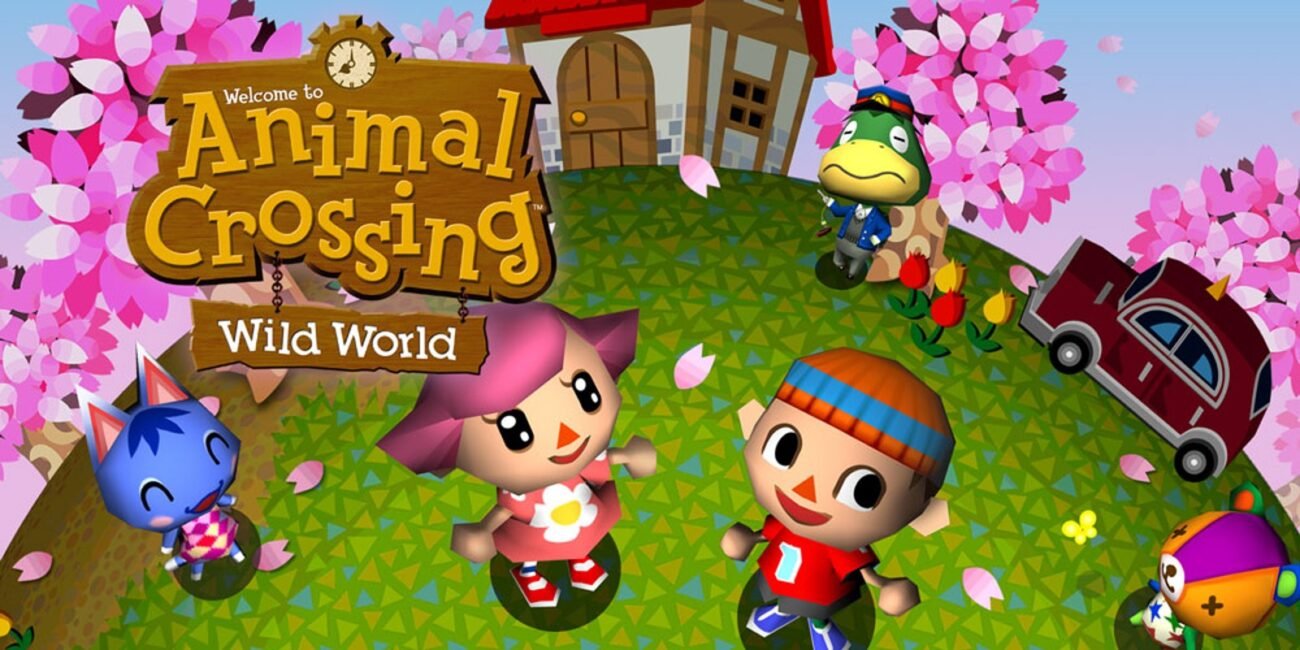
TL;DR: Animal Crossing: Wild World is a life simulation video game developed and published by Nintendo for the Nintendo DS in 2005. The NDS version was the first Animal Crossing game made exclusively for handheld play, and it included real-time seasons, wireless multiplayer, and a completely portable version of the series’ trademark daily-life loop, making it one of the most culturally significant DS games ever released.
Game Details at a Glance
| Detail | Info |
|---|---|
| Game | Animal Crossing: Wild World |
| Developer | Nintendo EAD |
| Publisher | Nintendo |
| NDS Release Date | November 23, 2005 (Japan); December 5, 2005 (North America) |
| Platform | Nintendo DS (primary); Wii U Virtual Console (later) |
| Genre | Life Simulation |
| ESRB Rating | E (Everyone) |
| Players | 1–4 (local wireless and Nintendo Wi-Fi Connection) |
| Series | Animal Crossing |
| ROM Status | Not endorsed here — legal alternatives covered below |
Animal Crossing: Wild World ROM NDS Defined a Generation of Handheld Gaming
There are successful Nintendo DS games. Then there is Animal Crossing: Wild World ROM NDS – a game that didn’t just sell well, it fundamentally transformed how people thought about what a portable could do.
Released in late 2005, Wild World took everything that made the GameCube original compelling and rebuilt it for a device you could carry in your pocket. The result was a game that players returned to every single day — not because of some artificial reward loop, but because the game’s real-time clock meant your village actually changed while you were living your life. Miss a week? The weeds would show it. Log in on your birthday? Your neighbors remembered.
That design philosophy — a game that respects your daily rhythms rather than demanding you abandon them — turned Wild World into one of the most genuinely beloved titles in Nintendo’s catalog. According to Nintendo’s sales data, Animal Crossing: Wild World ROM NDS sold over 11.75 million copies worldwide, making it one of the best-selling DS games of all time.
Searches for “animal crossing wild world rom nds” remain consistently high years after the DS hardware was discontinued. Most results lead to unauthorized download repositories with no meaningful content about the game itself. But this guide does the opposite: an in-depth look at what made Wild World exceptional, a dissection of its key gameplay, how it stacks up against previous entries in the series, and clear recommendations for legal ways you can still play it today.
What Is the Animal Crossing: Wild World NDS Version?
How Did Wild World Differ from the GameCube Original?
The GameCube’s Animal Crossing: Wild World ROM NDS (2001 in Japan, 2002 in North America) was the series’ founding stone, a life simulation that takes place in a small village inhabited by anthropomorphic animal neighbors, entirely governed by a real-time calendar and player-directed objectives. It was a joy, an actual rest, and nothing like anything else that was available on a home console at the time. The limitation was obvious: you had to sit in front of a TV to play it.
Wild World solved that constraint by rebuilding the experience from the ground up for the Nintendo DS. Nintendo EAD didn’t simply port the GameCube game — they redesigned it for the hardware, rethinking the town structure, interface, and multiplayer systems to fit a device built for on-the-go sessions. The GameCube version used a linear north-to-south town layout; Wild World introduced a spherical globe structure that made the town feel more organic and less constrained by screen orientation. The above camera was changed to take advantage of the DS’s dual-screen arrangement, with the top screen managing the surroundings and the bottom screen serving as the player’s primary interactive interface.
The transition to a handheld also affected how people played. Daily check-ins became actually daily – the DS was portable, the game was constantly with you, and the ten-minute session became just as valid as a two-hour play session on a television.
Why Did Wild World Become a Cultural Phenomenon on the Nintendo DS?
Several factors had converged. The Animal Crossing: Wild World ROM NDS was approaching peak market penetration in 2005 and 2006, with a user base that skewed toward the exact demographic — young players, students, and casual gamers — who responded most strongly to Wild World’s low-pressure design. The game had no fail state, no big bad, no endpoint. You could play as long as you wanted, and the game would wait patiently for you to come back.
When Wild World arrived, it brought with it Nintendo’s Wi-Fi Connection service, which allowed players to visit each other’s cities online – something that was actually new for a handheld title in 2005. Sharing fruit, trading furniture, and showing off home decoration became social rituals that spread through schools and communities in ways that single-player games rarely achieve. Nintendo’s Wi-Fi Connection service was one of the first significant online multiplayer systems for a handheld platform, and Wild World was its flagship title.
Gameplay and Core Features
How Does Daily Life Simulation Work in Animal Crossing: Wild World?
Wild World utilizes a real-time clock, based on the DS’s internal clock. In-game seasons, weather, holidays, and events are in sync with the real calendar. December snow. Spring is for the cherry blossoms. The Harvest Festival takes place on Thanksgiving. Log in at 3 a.m. and the village is quiet, with different insects active and a different ambient soundtrack than the afternoon.
This real-time framework is the structural backbone of everything else. Tom Nook’s shop upgrades based on how much money you spend over time. Villagers remember when they last spoke to you. Seasonal fish and insects appear only during specific months. The game rewards consistent engagement — not marathon sessions, but regular, brief visits that accumulate into a living record of your time with it.
What Activities Are Available in Animal Crossing: Wild World?
Animal Crossing: Wild World ROM NDS’s core loop is deliberately open-ended. Players can pursue any combination of the following:
- Fishing — Over 40 fish species tied to specific seasons, times of day, and water locations. The fishing minigame uses a simple shadow-and-timing mechanic that stays satisfying across hundreds of sessions
- Bug catching — A parallel collection system with its own seasonal calendar and rarity tiers; rare bugs like the Golden Stag and Raja Brooke Birdwing appear only during specific months and times
- Fossil hunting — Players dig up fossils daily, have them identified by the museum curator Blathers, and donate them toward completing the museum’s paleontology wing
- Interior and exterior decoration — A deep furniture collection system spanning hundreds of items organized into themed sets; home decoration is a central expression system for the game
- Gardening and landscaping — Planting and cross-pollinating hybrid flowers; managing weed growth; placing decorative items around the village
- Shop upgrades — Tom Nook’s store progresses through five upgrade stages based on cumulative player spending, eventually becoming Nookington’s — the largest store in the game
- Completing the Nook catalog — A long-term completionist goal involving acquiring every furniture item available through the in-game shopping catalog
None of these activities are mandatory. Wild World generates no pressure to complete any of them. That absence of obligation is precisely what makes sustained engagement feel rewarding rather than compulsory.
How Does Villager Interaction Work in Animal Crossing: Wild World?
Each Wild World village has eight animal villagers selected from a pool of over 150 characters with different personality types. Villagers fit into six personality archetypes: grouchy, jock, lazy, normal, perky and snobby. Different personality types lead to different styles of dialog and relationship dynamics.
Encounters recalled by villagers. Talk to a neighbor every day and they warm to you over time, eventually gifting you furniture, requesting favors, and discussing their personal histories. Ignore a neighbor long enough and they will pack up and leave. The relationship structure isn’t a mechanical grind – it evolves spontaneously from regular play, making the departure of a favorite villager feel like a true loss.
Wild World introduced the concept of individual catchphrases that players could teach to their neighbors — a small personalization feature that created an unexpected form of community expression, especially in the online multiplayer era when players would spread catchphrases across villages worldwide.
What Is the Museum’s Role in Wild World’s Completionist Appeal?
The museum is run by the owl curator Blathers, and accepts donations of fish, insects, fossils and artwork. As players give specimens, each wing will fill progressively, and they are presented in permanent exhibits. You’re going to need some prolonged seasonal play to successfully finish a wing of the museum, as some fish only arrive in winter, some bugs only in summer, thus completing the museum is a months-long endeavor that rewards consistency rather than a single concentrated session.
One of Wild World’s best long-term hooks is the museum’s completionist appeal. Each new gift comes with Blathers’ commentary – a particular blend of joy and squeamishness about insects that became one of the game’s most recognized recurring jokes, and a character trait that the franchise has preserved across every following release.
Animal Crossing: Wild World ROM NDS vs. Other Animal Crossing Titles
How Does Wild World Compare to the GameCube Animal Crossing?
The GameCube original was more stuffed by raw count, with a larger town, more furniture sets, more holidays, and a slightly fuller collection of activities, including island tours available via the Kapp’n boat. Wild World reduced some of that content in the shift to handheld, cutting the town size and deleting a few features to match DS hardware limits.
What Wild World gained was portability, wireless multiplayer, and the Wi-Fi Connection feature. Those changes changed the nature of the experience fundamentally. The GameCube version was a game you played at your house. Wild World was a game you played everywhere — and the online multiplayer feature transformed it from a single-player simulation into a social platform years before that framing became standard.
How Does Wild World Compare to Animal Crossing: New Leaf on 3DS?
New Leaf (2012) is frequently cited as the series’ high point before New Horizons. It built on the premise of Wild World tremendously, allowing you to be the mayor of your town, introducing public works projects, expanding the personalization systems, adding the island resort function, and nearly doubling the furnishing inventory. New Leaf operated on the 3DS, with much improved hardware, including StreetPass support and a larger screen.
By comparison, Wild World feels more intimate. The smaller scope — fewer villagers, a contained town, a focused set of activities — means the game never sprawls beyond its own coherence. New Leaf is the bigger, more feature-rich game. Wild World is the tighter, more emotionally immediate one. New Leaf is familiar and less personal, as many of the players who grew up with Wild World will say, and that in itself speaks much about how deeply the original DS experience imprinted.
What Did Animal Crossing: Wild World Do That Set It Apart from New Horizons?
Animal Crossing: New Horizons (2020) sold over 45 million copies, according to Nintendo’s financial reports, becoming one of the best-selling games in Nintendo’s history. Its success owed a significant debt to Wild World’s foundational design — the real-time calendar, the villager relationship system, the daily check-in loop.
The key difference is design philosophy. New Horizons is an island-building game as much as a life simulation — it introduced crafting, terrain modification, and large-scale construction projects that shifted the game toward active creation. Wild World offered no such tools. You could decorate your house and plant some flowers, but the village itself wasn’t yours to reshape. That constraint made Wild World feel more like inhabiting a world than constructing one — a distinction that still resonates for players who prefer the series’ older, more passive rhythm.
Graphics, Sound, and Immersion on the NDS
What Were the Visual Design Choices in Animal Crossing: Wild World?
Animal Crossing: Wild World ROM NDS was built around the Nintendo DS, a machine with obvious technical limits, but Nintendo EAD used those limits to create a cohesive esthetic. Characters use spherical, basic 3D models with exaggerated proportions — giant heads, little bodies — that read effectively at small screen sizes and give the game a toylike visual warmth. The environmental design leans on soft colors and gentle lighting, providing a visual register that feels serene and friendly regardless of the season or time of day.
The dual-screen configuration handles the game effectively. The top screen shows your character and village from a fixed overhead perspective. The bottom screen serves as your primary interactive surface — displaying your pockets, map, chat interface, and item management. Touch controls for writing letters and excavating seem natural and the map on the bottom screen makes navigation straightforward in a manner the GameCube version’s interface didn’t quite get right.
What Makes the Wild World Soundtrack So Distinctive?
Animal Crossing: Wild World ROM NDS’s music system is one of the more complex on the Nintendo DS. The game doesn’t just repeat an ambient track; it creates music dynamically, based on the current hour of the day. There are 24 unique hourly themes, each with variants for different weather conditions and seasons. The result is a soundtrack that players experience as continuous ambient music that subtly shifts throughout the day — something that reinforces the real-time clock at an emotional level without drawing attention to itself.
The 3am theme in particular became legendary among longstanding fans – a spare, sad song that plays when the village is virtually deserted, perfectly suited to the sensation of playing silently in the dark. K.K. Slider’s Saturday evening concerts, performing original compositions in the village plaza, added a layer of musical discovery that gave players reason to log in on weekends specifically.
How Did Wireless Connectivity Work in Animal Crossing: Wild World?
Animal Crossing: Wild World ROM NDS used two connection systems. Local wireless allowed players in DS radio range to visit each other’s towns at the same time — up to four players could be in the same town at the same time, roaming around, trading stuff and playing together in real time. Nintendo Wi-Fi Connection allowed the same functionality over the internet, using Nintendo’s online infrastructure to connect players globally.
The Wi-Fi connection involved an awkward friend code exchange, by contemporary standards, but the experience it allowed — walking thru a friend’s town, seeing their decor, trading fruit from your native tree for theirs — was genuinely novel for a handheld game in 2005. Friend codes were distributed via message boards, school hallways, and early social media, creating informal social networks centered around the game.
Why Animal Crossing: Wild World Defined the DS Era
Animal Crossing: Wild World ROM NDS’s cultural footprint on the DS is inseparable from the hardware moment it existed in. The DS was in the hands of a vast user base encompassing children, students, and adults – an extraordinarily broad demographic for a handheld system. Wild World’s design spoke to all of them equally. There was nothing to be awful at. No talent was required. The game asked only that you show up, and rewarded you for doing so with the specific comfort of a small digital world that remembered you were there.
The game’s legacy stretches directly into every Animal Crossing title that followed. The museum donation structure, the real-time calendar, the personality-based villager system, the furniture catalog framework — all of these were established in the GameCube original but refined and popularized by Wild World. New Leaf’s mayoral system and New Horizons’ island building are expansions on a foundation that Wild World laid for a global audience.
Animal Crossing: Wild World ROM NDS was the first Animal Crossing for a generation of players. The portability made it more accessible than the GameCube version had been, and its Wi-Fi connectivity gave it a social dimension that increased its reach. The nostalgia it generates now is proportional to the time those players spent with it — which, given the daily check-in design, was often a great deal of time.
Legal Ways to Play Animal Crossing: Wild World Today
Can You Still Buy Animal Crossing: Wild World on the Nintendo eShop?
In March 2023, DS and Wii U games became unavailable for purchase on the Nintendo eShop. Prior to that closure, Animal Crossing: Wild World ROM NDS was available on the Wii U Virtual Console, but as of 2025, it’s no longer available for purchase on any official Nintendo digital storefront.
Players who purchased the Wii U Virtual Console edition before the eShop closure can still re-download it, but new purchases are no longer permitted through that channel. There is presently no Nintendo Switch Online equivalent offering DS titles, albeit Nintendo Switch Online + Expansion Pack contains Game Boy Advance and Nintendo 64 titles, and NDS support has been a regular source of conjecture among Nintendo hardware experts.
Where Can You Buy an Animal Crossing: Wild World NDS Cartridge?
Physical DS cartridges are available on the secondary market. Pricing varies by condition and completeness:
- Cartridge only: approximately $15–$30 USD
- Complete in box (with original case and manual): $40–$75 USD
- Sealed/new old stock: significantly higher, reflecting collector premiums
Reliable sources for secondary market DS cartridges include:
- eBay — largest selection; filter for sellers with strong feedback and clear photos showing the cartridge label and board
- Mercari — good inventory of complete copies; competitive pricing
- DKOldies, Lukie Games, JJGames — U.S.-based retro retailers that test and grade cartridges before listing
- Local retro game stores — Animal Crossing titles appear regularly and tend to be in good condition given their casual, non-intensive playstyle
Animal Crossing: Wild World ROM NDS plays on original Nintendo DS, DS Lite, DSi, 3DS, and 2DS hardware. All Nintendo 3DS and 2DS models are backwards compatible with Nintendo DS cartridges.
What About Emulation — What Are the Legal Considerations for Animal Crossing: Wild World?
Downloading and using emulation software for the Nintendo DS is allowed. The two most popular are MelonDS and DeSmuME. These programs emulate DS hardware but do not contain any proprietary Nintendo code.
Animal Crossing: Wild World ROM NDS remains under Nintendo copyright. Downloading a ROM file without owning a physical cartridge is generally considered copyright infringement under U.S. copyright law and most international equivalents. The game’s age does not create a legal exception.
Players who own a legitimate cartridge and wish to use emulation software for convenience occupy a legally complex position. The personal backup argument — that generating a digital replica of a cartridge you lawfully possess may qualify as fair use — has not been definitively ruled on in U.S. courts. This is the most defensible position for emulation use coupled with physical ownership, although it is not settled legal protection.
How Does MelonDS Handle Animal Crossing: Wild World ROM NDS?
For 2025, our go-to DS emulator is MelonDS—it’s actively maintained, accurate in its hardware emulation, and can run Wild World without any major issues. The twin screen layout is produced appropriately , both displays are visible at the same time in the emulator window . The DS stylus interface is perfectly recreated with touch input from mouse or touchscreen-enabled devices.
The Nintendo Wi-Fi Connection service — which provided Wild World’s online multiplayer — was shut down by Nintendo in May 2014. Local wireless multiplayer can be replicated through MelonDS’s local multiplayer feature when multiple instances run on the same network, but the global online functionality is no longer available through official channels. Unofficial servers have been developed by the fan community, albeit their availability and compatibility vary.
Is Animal Crossing: Wild World ROM NDS Likely to Come to Nintendo Switch Online?
As of 2025, Nintendo has not announced Nintendo DS support for Nintendo Switch Online. The Switch Online + Expansion Pack service currently includes Game Boy Advance and Nintendo 64 titles. DS titles represent a natural next step given the pattern of Nintendo’s retro catalog additions, and Wild World would be among the highest-profile candidates for inclusion given its commercial and cultural significance.
No official announcement has been made. Until one is, the physical cartridge and secondary market remain the most reliable legal access routes.
Frequently Asked Questions About Animal Crossing: Wild World NDS
What is Animal Crossing: Wild World NDS, and how does it differ from other Animal Crossing games?
Animal Crossing: Wild World ROM NDS is a life simulation game developed by Nintendo EAD for the Nintendo DS, released in 2005. It was the first Animal Crossing game designed specifically for handheld play. Wild World introduced Wi-Fi multiplayer functionality to the series, a spherical globe town layout replacing the GameCube original’s linear design, and a touch-screen interface that made item management and letter writing more intuitive. Compared to New Leaf and New Horizons, Wild World is smaller in scope but more intimate in feel — it has fewer features but a tighter, more focused daily rhythm.
How many villagers are in Animal Crossing: Wild World ROM NDS?
Animal Crossing: Wild World ROM NDS features a roster of over 150 potential villagers, with eight living in your village at any given time. Villagers fall into six personality types — cranky, jock, lazy, normal, peppy, and snooty — each generating different dialogue styles and relationship dynamics. Players cannot directly choose which villagers populate their town beyond influencing arrivals and departures through interaction patterns.
Is it legal to download an Animal Crossing: Wild World NDS ROM?
No. Animal Crossing: Wild World ROM NDS remains under Nintendo copyright. Downloading a ROM file without owning the physical cartridge is generally considered copyright infringement regardless of the game’s age or platform status. Legal options include purchasing a physical NDS cartridge on secondary markets for approximately $15–$30 USD, or waiting for a potential Nintendo Switch Online release, which has not been announced as of 2025.
Where is the best place to buy Animal Crossing: Wild World legally today?
Physical cartridges are available on eBay, Mercari, and retro game retailers including DKOldies, Lukie Games, and JJGames. Cartridge-only copies typically cost $15–$30 USD; complete-in-box copies run $40–$75 USD. The Wii U Virtual Console version is no longer available for new purchases following the eShop closure in March 2023. No current digital storefront offers Wild World for purchase.
How long does it take to complete Animal Crossing: Wild World?
Animal Crossing: Wild World ROM NDS has no defined completion point, but achieving specific milestones gives a sense of scope. Completing the museum — donating all fish, insects, fossils, and artwork — requires sustained play across all four seasons and takes a minimum of one real-world year due to seasonal availability requirements. Earning a golden exterior on your home through Tom Nook fully upgrading it requires approximately 7.5 million bells. Most players log dozens to hundreds of hours across months of daily play rather than completing a defined campaign.
Can Animal Crossing: Wild World be played online in 2025?
The official Nintendo Wi-Fi Connection service that powered Wild World’s online multiplayer was shut down by Nintendo in May 2014. Official online multiplayer is no longer available. Unofficial fan-run servers have been established and can be accessed through modified DS firmware, though their technical complexity, stability, and long-term availability vary. Local wireless multiplayer between multiple DS cartridge owners remains fully functional without any modification.
How does Animal Crossing: Wild World’s real-time clock work?
Wild World’s calendar draws from the Nintendo DS’s internal clock, synchronizing the game’s seasons, weather, time of day, and special events with the real world. Logging in during summer generates summer fish and insects; logging in during winter generates snow and winter-exclusive events. The 24-hour clock affects villager schedules, shop hours, and ambient music. Changing the DS’s clock to manipulate in-game events — known as time traveling — is possible and commonly discussed, though it bypasses the real-time design the game was built around.
What is the difference between Animal Crossing: Wild World and Animal Crossing: New Leaf?
Animal Crossing: New Leaf (2012, Nintendo 3DS) expanded on Wild World substantially. New Leaf introduced the mayoral role, allowing players to commission public works projects and set town ordinances. The furniture and clothing catalogs were significantly larger. The island resort added a minigame system absent from Wild World. Hardware improvements on the 3DS also allowed better graphics, a larger screen, and StreetPass integration. Wild World is smaller and less feature-rich but often described by longtime fans as more emotionally resonant — a reflection of how foundational it was for players who encountered it first.
Why Animal Crossing: Wild World Is Still Worth Playing
Download repositories are the top sites for searches for “animal crossing wild world rom nds”. They answer a question, and nothing more. No history, no analysis, no honest description of what makes the game worth tracking down in the first place.
Wild World is worth tracking down. It’s a 2005 handheld game that still works exactly as designed, playable on hardware that costs very little, with a design philosophy that’s proven more durable than most contemporary titles. The real-time clock still ticks. The museum still fills one donation at a time. K.K. Slider still plays on Saturday nights.
Physical cartridges are accessible and affordable. Legal choices are straightforward. The game rewards the effort — not with spectacle or escalation, but with the particular satisfaction of a small world that simply keeps being there.
For different players:
- Players who grew up with Wild World: The experience holds up. The smaller scope that felt limiting compared to New Leaf actually ages better than expected — there is less to manage, and the intimacy that made it memorable is still intact
- New Horizons players curious about the series’ history: Wild World shows where the daily check-in design came from and why it worked before crafting and island building entered the formula
- DS collectors: Wild World is among the platform’s essential titles at a reasonable price point; complete-in-box copies are worth the premium
- Players exploring emulation: Owning the cartridge first makes the emulation discussion straightforward. Legal access is inexpensive. MelonDS runs the game cleanly, with the caveat that online multiplayer is unavailable through official infrastructure
The legal options are clear. The game is good. The rest is just finding a cartridge.