


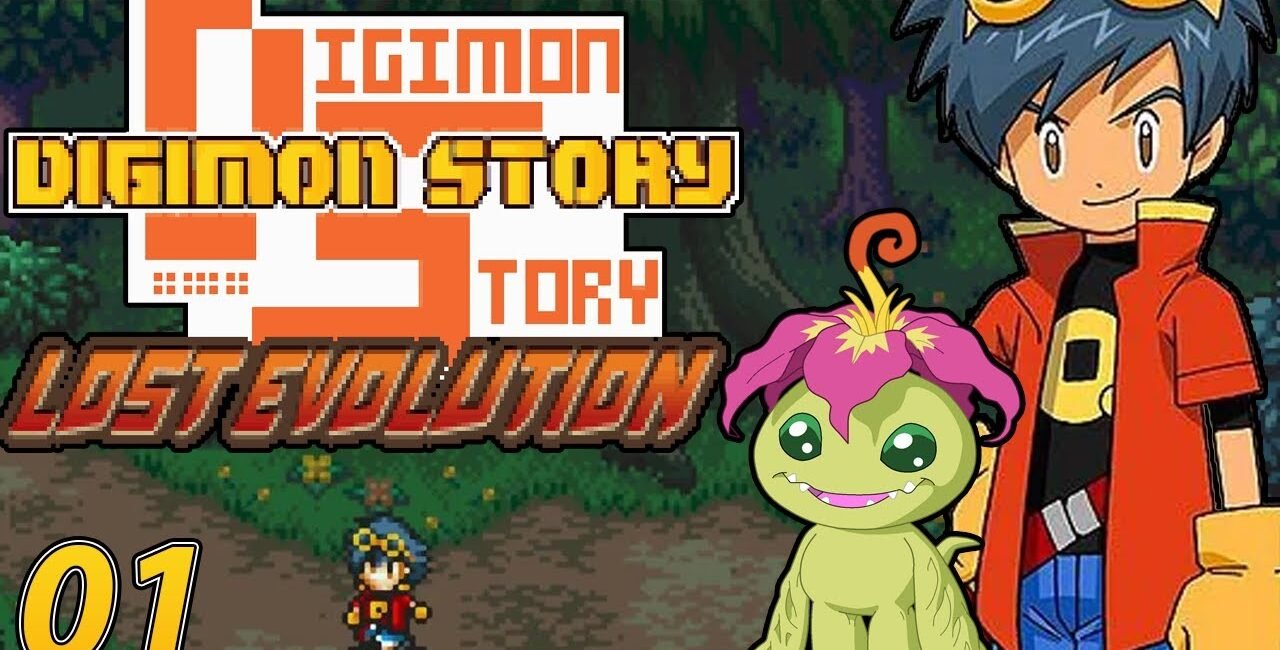
TL;DR: Digimon Story: Lost Evolution is a Japan-exclusive Nintendo DS RPG developed by BEC and published by Bandai Namco, released in 2010. Never officially localized in English, the game has a complete fan-made English translation patch available via the GBATemp community. This guide covers gameplay mechanics, the full Digimon roster, comparisons with other DS entries, and legal ways to access the game today.
Game Details at a Glance
| Detail | Info |
|---|---|
| Game | Digimon Story: Lost Evolution |
| Developer | BEC (Cattle Call) |
| Publisher | Bandai Namco Games |
| Release Date | July 1, 2010 (Japan only) |
| Platforms | Nintendo DS |
| Genre | RPG / Monster Collecting |
| CERO Rating | A (All Ages) |
| Players | 1 (single-player) |
| Series | Digimon Story (DS series) |
| English Patch | Yes — fan-made, community-developed |
What Is Digimon Story: Lost Evolution?
Digimon Story: Lost Evolution, released in Japan on July 1, 2010, is the third installment in the Digimon Story series for the Nintendo DS, following Digimon Story (2006) and Digimon Story: Sunburst/Moonlight (2007). Bandai Namco never sent the game west – no English localization was announced, no North American or European release followed, and the game remained inaccessible to English-speaking fans unless they could read Japanese.
That gap between the game’s quality and its inaccessibility is what drove the fan translation effort that eventually produced a complete English patch. Lost Evolution is not a niche curiosity. This is a full-fledged RPG with a roster of over 200 Digimon, a decent story, and improvements to the Digimon Story formula that make it arguably the best entry in the DS series. English-speaking fans knew it existed. They just couldn’t play it.
This guide exists to give those fans a complete picture: what Lost Evolution actually is as a game, how the English translation patch works, how it compares to the other DS entries in the series, and what the legal options are for obtaining and playing it today. There are no ROM links here – the emphasis is on providing you the information to make informed decisions on how to responsibly access the game.
Gameplay Mechanics and Features
What Is the Core Gameplay Loop in Digimon Story: Lost Evolution?
Lost Evolution follows a structure familiar to any player of the earlier DS games — a young DigiDestined-style protagonist, a DigiWorld in crisis, and a turn-based battle system as the primary mechanic. What separates Lost Evolution from its predecessors is how it refines each of those systems rather than replacing them.
The game takes place in a dungeon-like world that can be explored. In real time, players explore these areas to look for Digimon to recruit or battle, gather items, and progress the story by talking to nonplayer characters. The pacing is purposely slow — Lost Evolution favors a slow exploration rather than rushing thru areas and the dungeon designs are more varied than Sunburst/Moonlight.
Combat is turn-based and party-driven. Players bring a squad of Digimon into battles, selecting actions from a menu each turn. The system is accessible without being shallow — status effects, elemental affinities, and skill management all play meaningful roles at higher difficulty levels.
How Does Digimon Recruitment and Training Work?
Lost Evolution uses a scan system, improved over previous games, to recruit Digimon. Killing wild Digimon in dungeons increases a scan percentage gage for that species. Once the gauge hits a threshold — normally 100%, though some Digimon have greater requirements — the player can transform the data into a new Digimon. It is a slower, more deliberate system than simply catching Digimon directly, and it encourages repeated dungeon exploration rather than one-off encounters.
Training involves a stat-building mechanism related to the DigiFarm, a home base where Digimon are housed between conflicts. Players allocate Digimon to different regions of the farm – training grounds, cafeterias, and rest places — each effecting different stat development rates. DigiFarm management that’s well thot out separates players who can build competitive rosters from players who struggle with later content.
What Are the Evolution and Digivolution Mechanics?
Lost Evolution’s digivolution is based on the multi-stage paradigm used in the series: In-Training -> Rookie -> Champion -> Ultimate -> Mega, with some Digimon having additional Armor or Burst Mode stages. Evolution is not automatic – it involves meeting particular stat thresholds and, in some situations, fulfilling condition flags connected to battles waged or items used.
The breeding system allows players to breed two Digimon together to create offspring that inherits stat benefits and, in some situations, talents from both parents. This approach provides an additional layer of long-term optimization for players who wish to develop the strongest possible team. Casual players can disregard it and still complete the main story; competitive players and completionists will find it one of the game’s deepest mechanics.
What Side Quests and Post-Game Content Does Lost Evolution Include?
Depending on how much extra content the player plays, Lost Evolution’s core story will take about 20-30 hours. After the main story closes, a significant post-game opens up – extra dungeon regions, harsher enemy varieties, and Digimon that are solely available after the credits roll.
Side quests are scattered throughout the game via NPC requests. These range from basic fetch missions to multi-stage challenges that require specialized Digimon at high evolution stages. Completing them unlocks rare Digimon, equipment and DigiFarm enhancements that can’t be gained thru usual means. The post-game is strong enough that completionists will easily push the total play time past the 50 hour mark.
Complete Digimon Roster Overview
How Many Digimon Are in Lost Evolution?
Lost Evolution includes over 230 Digimon — the largest roster of any Digimon Story title on Nintendo DS. That breadth covers Digimon from multiple anime series and card game generations, including species not featured in Digimon World DS or Sunburst/Moonlight.
Are There Digimon in Lost Evolution Not Found in Other DS Games?
Yes Lost Evolution included various Digimon to the DS game library that were absent from prior entries, including Digimon from the Digimon Xros Wars era that were present at the time of the game’s 2010 release. Familiar faces, and some really new ones (for players who have beaten Sunburst / Moonlight).
The lineup skews more toward later-generation Digimon than the preceding DS releases, which used the original Digimon Adventure cast more extensively. Far more of the favorites players grew up with in the later seasons of the anime will be on this than any other DS entry.
What Are the Evolution Paths and Breeding Mechanics?
Evolution paths in Lost Evolution are more interconnected than in the earlier DS games. Many Digimon have multiple possible Mega-level evolutions depending on which stat thresholds are prioritized during training, which means two players raising the same Rookie-level Digimon can end up with meaningfully different Mega-level results.
The breeding system, as noted above, allows stat inheritance between parent Digimon. At higher levels of optimization, breeding chains — where the offspring of one pair becomes a parent in a subsequent breed — allow players to build Digimon with stat profiles that far exceed what normal training alone can achieve. The system is optional, but it is the clearest example of Lost Evolution’s greater mechanical depth relative to earlier entries.
How Does Lost Evolution Compare to Other Digimon DS Games?
Digimon Story: Lost Evolution vs. Digimon World DS — What’s Different?
Digimon World DS, released in 2006, was the series’ introduction on Nintendo DS. It established the core scan-and-recruit loop, turn-based battles, and DigiFarm management that Lost Evolution later refined. Compared to Lost Evolution, Digimon World DS feels noticeably thinner: the roster is smaller, the dungeon variety is more limited, and the stat systems are less developed.
Digimon World DS has the advantage of official English localization — players outside Japan can access it without a patch. For players choosing an entry point into the DS series, that accessibility matters. But Lost Evolution’s expanded roster, stronger story, and deeper mechanics make it the better game once the language barrier is resolved.
Digimon Story: Lost Evolution vs. Digimon Dusk and Dawn — Which Is Better for English-Speaking Players?
Digimon Dusk and Dawn — published as Sunburst and Moonlight in Japan — were localized for English-speaking markets in 2007, providing them the same accessibility benefit as Digimon World DS. The dual-version system, which parallels the Pokémon version concept, splits the roster between two games and encourages trading between players.
Lost Evolution consolidates the split roster into a single game, which is a meaningful practical gain. Now players don’t need two cartridges to get the full breadth of the DS Digimon library. The tale of Lost Evolution is likewise more unified than either Dusk or Dawn, having a stronger narrative throughline and better pacing.
Lost Evolution is the better choice for English-speaking players who don’t mind applying a fan translation patch. For players who prefer official English software and a trading-based experience, Dusk/Dawn remains a good choice.
Why Does Lost Evolution Stand Out Among the Digimon DS Series?
Three factors distinguish Lost Evolution from the other DS entries: roster size, mechanical depth, and narrative quality. It has more Digimon, more evolution paths, and a more engaging story than any of its DS predecessors. The DigiFarm and breeding systems reach their most refined state here. Post-game content is more substantial.
The trade-off is the language barrier — a barrier that, thanks to the fan translation patch, is no longer an obstacle for English-speaking players with the patience to apply it.
English Translation Patch Guide for Digimon Story: Lost Evolution
Is There a Complete English Translation Patch for Lost Evolution?
Yes. A fan translation community is working on a comprehensive English translation patch for Digimon Story: Lost Evolution. The patch translates everything in-game text, including menus, dialogs, item descriptions, Digimon names, skill names, and plot information, into English. It is a high quality translation according to the Digimon fan community, not partial or machine translated, but a full translation.
The patch is well-documented and debated at length on GBATemp (gbatemp.net) and GameBrew, where the translation team uploaded patch notes, version history, and help threads. Here are the main community sites to find patch info, known bugs, and how to install.
How Is the English Patch Applied to Digimon Story: Lost Evolution?
Applying a fan translation patch to a Nintendo DS game follows a standard process used across retro game translation projects. The general steps are as follows:
- Obtain a compatible ROM file. The patch is applied to a specific version of the Digimon Story: Lost Evolution ROM — typically the Japanese retail version. Patch documentation on GBATemp specifies the exact ROM version required.
- Download the patch file. The patch is distributed as an IPS or xdelta file, depending on the version.
- Use a patching tool. Software tools such as Lunar IPS (for IPS patches) or xdelta UI (for xdelta patches) apply the translation data to the ROM file. Both tools are freely available and well-documented.
- Verify the output. After patching, the ROM file should be playable with fully translated text. Community threads on GBATemp include checksums and verification steps to confirm the patch was applied correctly.
This guide does not host or link to ROM files. Sourcing a ROM file is the player’s responsibility; the legal considerations for doing so are covered in the section below.
What Is the Patch Quality and Community Reception Like?
The Lost Evolution English patch is highly appreciated by Digimon fans for its accurate and thorough translation. The translation team worked from the original Japanese script rather than relying on machine translation, which provides the dialogue genuine English wording rather than the stilted output prevalent in lower-quality patches.
The reaction from the community is very enthusiastic, as seen in GBATemp forum posts. Players who played thru the patched version say there are no game-breaking issues, the menu translations are crisp and the conversation feels natural all throughout the plot. Most of the known issues have been fixed in later updates, although minor formatting issues in a few text boxes were reported in earlier patch versions.
What Are the Technical Requirements and Compatibility Notes?
In particular, for Lost Evolution, MelonDS is suggested, because it has better accuracy for DS-era titles that employ the system’s two displays and touch input than prior emulators, and its active development ensures compatibility concerns are resolved faster. DeSmuME works, but hasn’t seen many upgrades in recent years.
Legal Access Options for Digimon Story: Lost Evolution
Can You Buy Digimon Story: Lost Evolution as a Physical Copy?
Yes. Physical copies of Digimon Story: Lost Evolution are Japanese DS cartridges, sold through secondary markets. The game was never localized in English, so all physical copies are in Japanese. The translation patch is applied to a digital ROM, not a physical cartridge.
You can obtain physical copies on eBay (Japanese sellers and established retro game dealers), Amazon Japan with international shipping and from dedicated retro game retailers such as Play-Asia, which stocks Japanese DS titles. Lost Evolution cartridges in good condition tend to be worth between $15-$40 USD depending on condition and if the box and manual are included.
As with any retro game purchase through secondary markets, buying from established sellers with clear return policies reduces the risk of receiving a counterfeit or damaged cartridge. Lost Evolution is not among the most commonly counterfeited DS titles, but verification is worth the extra step.
What Are the Emulation Considerations and Legality?
Nintendo DS emulation occupies the same legal complexity as emulation of any vintage platform. Emulator software – MelonDS, DeSmuME, and others — is allowed to download and use. The legality of ROM files is jurisdiction-dependent and tied to questions of ownership.
Under U.S. copyright law, the most commonly cited position is that creating a personal backup of a game you legally own may qualify as fair use, though this has not been definitively litigated. Downloading a ROM file of a game you do not own is generally considered copyright infringement regardless of the game’s availability or localization status — the fact that Lost Evolution was never released in English does not create a legal exception.
The practical solution advised by the fan community: purchase a physical Japanese cartridge from a reliable seller, then source or manufacture a ROM from that owned copy for emulation purposes. This supports the original developers thru the secondary market purchase and is consistent with the personal backup framework.
This guide does not link to sites to download ROMs. Sites appearing in searches for “Digimon Story Lost Evolution English ROM,” “Digimon Story Lost Evolution English patched ROM,” or “Digimon Story Lost Evolution English translation ROM” are predominantly ROM aggregator sites operating without authorization. Many of these sites carry security risks — malware, bundled adware, and deceptive download buttons are common. The GBATemp and GameBrew communities are the appropriate starting points for patch documentation and community guidance, not ROM aggregator pages.
Where Can Players Find the Original Japanese Version Safely?
For physical Japanese DS cartridges:
- eBay — search for Japanese sellers with established feedback and clear return policies
- Play-Asia — a reputable retailer specializing in Japanese games and merchandise
- Amazon Japan — available via international shipping, often with condition ratings
- Local Japanese import shops — available in major cities; conditions are usually well-graded
For patch documentation and community support:
- GBATemp (gbatemp.net) — primary hub for the English translation patch, with version history, installation guides, and active community support threads
- GameBrew (gamebrew.org) — wiki-style documentation for the patch and game details
Frequently Asked Questions
What is the Digimon Story: Lost Evolution English patch, and is it complete?
The Digimon Story: Lost Evolution English patch is a fan-made translation that converts all in-game text from Japanese to English, including menus, story dialogue, item descriptions, and Digimon and skill names. As of the most recent version available on GBATemp, the patch is considered complete — covering the full game without known gaps in translated content. It is not an official Bandai Namco localization; it is a community project produced independently by fan translators.
Is Digimon Story: Lost Evolution worth playing if I’ve already finished Digimon Dusk and Dawn?
Yes. Lost Evolution is mechanically more advanced than Dusk and Dawn, with a larger Digimon roster, a more cohesive story, more refined breeding and training systems, and more substantial post-game content. Players who enjoyed Dusk or Dawn and want a deeper DS entry in the same genre will find Lost Evolution a significant step up — provided they are willing to apply the English translation patch.
How does the Lost Evolution English patch compare in quality to other fan translations?
The Lost Evolution patch is consistently ranked among the higher-quality fan translations in the Digimon community. The translation team worked from the original Japanese script rather than using machine translation tools, and the dialogue reads naturally in English throughout. Community feedback on GBATemp is broadly positive, with users noting clean menus, accurate Digimon name translations, and minimal text formatting issues in the current patch version.
What emulator should I use to play the patched Digimon Story: Lost Evolution?
In 2025, MelonDS is the preferred emulator for the patched Lost Evolution ROM. MelonDS is continuously maintained, has great compatibility with DS-era titles, and supports the dual-screen and touch-input capabilities that other earlier emulators struggle with. DeSmuME is a functional alternative but has not been actively updated in recent years. Both are available for free download from their respective official project pages.
Is it legal to download a Digimon Story: Lost Evolution ROM if the game was never released in English?
Nah. The lack of an official English release is no legal loophole in copyright law. Digimon Story: Lost Evolution is © Bandai Namco. It is generally considered copyright infringement under U.S. law and the laws of most other jurisdictions to download a ROM of the game without owning the actual copy. The preferred option is to buy a physical Japanese cartridge from a reputable second-hand seller and get hold of or make a ROM from that cartridge.
How long does it take to complete Digimon Story: Lost Evolution?
The main tale of Digimon tale: Lost Evolution takes roughly 20-30 hours to beat, depending on how much optional content the player takes part in beside the main objective. Completing all of the side missions and post-game stuff will take you over 50 hours in total. Players who target complete the full Digimon roster thru scanning, training and breeding can push playtime far higher.
Where can I find the Digimon Story: Lost Evolution English patch?
The patch is maintained and supported by the GBATemp community at gbatemp.net and GameBrew at gamebrew.org. The translation part of GBATemp provides the most extensive installation documentation, version history and active community support. This tutorial does not provide direct links to patch files or ROM files – use those community centers for current, correct download and installation instructions.
A Game That Deserved a Global Audience
Digimon Story: Lost Evolution did not fail to reach English-speaking players because it was a weak game. It was a casualty of timing, market choices, and the fact that Bandai Namco’s localization focus had shifted away from DS RPGs as the platform aged. The game that exists — with its 230+ Digimon roster, refined battle and breeding systems, and the most substantial post-game of any DS entry in the series — is genuinely worth the effort to access.
The last real barrier removed is the fan translation patch. It’s finished, it’s well-respected, and it’s actively maintained by a community that clearly cared about getting the translation right. For Digimon DS lovers who went through Digimon World DS, Dusk, and Dawn and felt there was nothing further to find on the device, Lost Evolution provides the answer.
For different player types:
- Digimon World DS veterans: Lost Evolution is a direct evolution of what you already know — same core loop, substantially more depth, and a roster large enough to sustain a full second playthrough with an entirely different team.
- Dusk/Dawn players looking for more: Lost Evolution consolidates the dual-version split into a single, complete experience. The story is more cohesive, the post-game is meatier, and the breeding system rewards the time investment more richly.
- New DS Digimon fans: Start with Digimon World DS or Dusk/Dawn for their official English versions and accessible entry points. Return to Lost Evolution once you know the systems — the added complexity rewards prior experience with the series.
- Completionists: The full DS Digimon trilogy — Digimon World DS, Sunburst/Moonlight, and Lost Evolution — shows clear mechanical progression across its three entries. Playing them in order gives the clearest picture of how the series developed on the platform.
The translation patch exists. The game is available. There is no reason to miss it.