

TL;DR: Kirby Mass Attack ROM is a 2011 Nintendo DS game developed by HAL Laboratory that lets players control up to 10 Kirbys simultaneously using only the touch screen. This guide covers gameplay mechanics, a full walkthrough of story mode, boss strategies, mini-games, and how to access the game legally in 2024. No ROM download links are hosted or provided.
Game Details at a Glance
| Detail | Info |
|---|---|
| Title | Kirby Mass Attack |
| Platform | Nintendo DS |
| Developer | HAL Laboratory |
| Publisher | Nintendo |
| Genre | Action-Platformer |
| Original Release Date | August 4, 2011 (JP) / September 19, 2011 (NA) |
| Players | 1 (single-player) |
| ESRB Rating | E (Everyone) |
| ROM Context | This review is editorial in nature and does not host or link to ROM files |
What Is Kirby Mass Attack ROM — and Why Does It Matter for Nintendo DS Fans?
Kirby Mass Attack ROM arrived late in the Nintendo DS lifetime, yet it made every bit of that timing count. Released in 2011 — the same year the Nintendo 3DS launched — HAL Laboratory built one of the most mechanically inventive entries in the Kirby franchise on hardware that was technically being phased out.
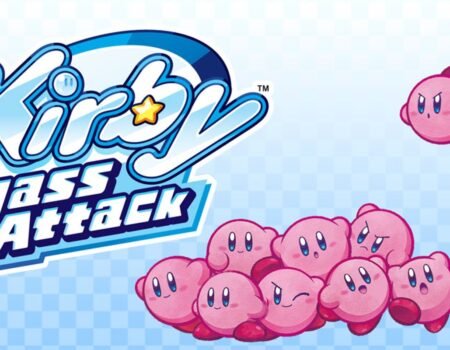
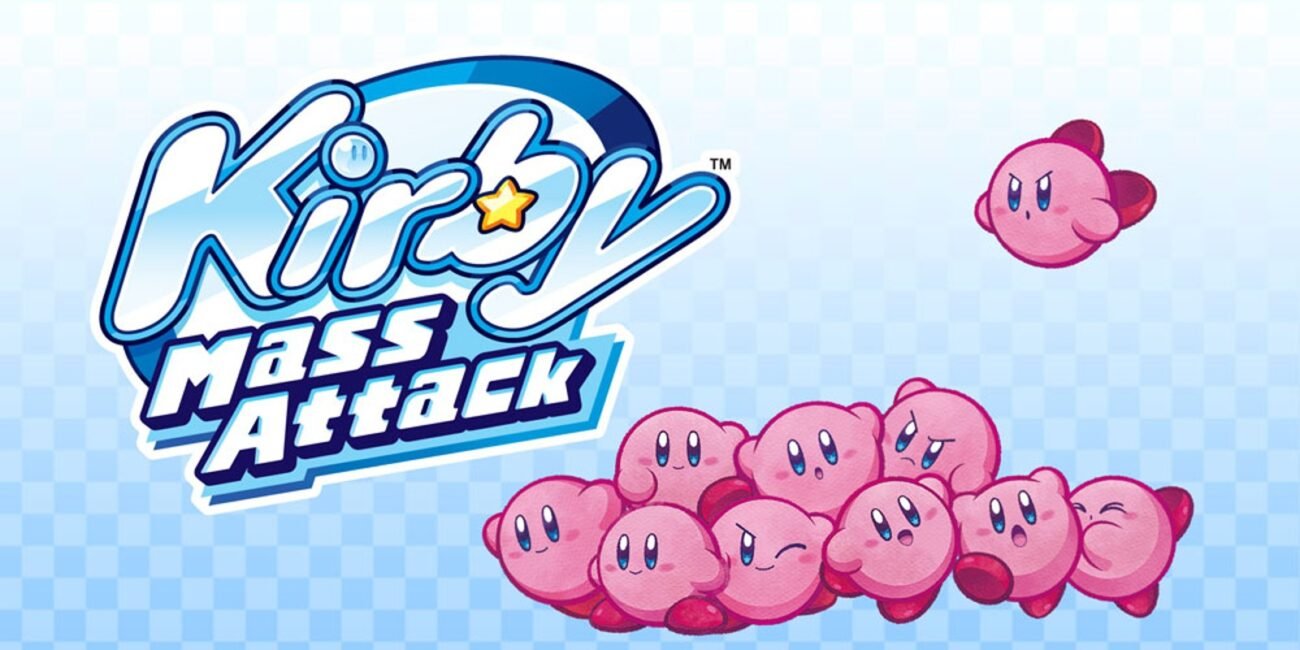
The premise sounds deceptively simple: Kirby is split into several copies of himself, and must bring them all back together. In practice you’re guiding a chaotic swarm of up to 10 pink puffballs thru dozens of hand-crafted stages using just the DS touch screen and pen. No traditional buttons control character movement. Every action — running, attacking, grabbing, flinging — runs entirely through tap and swipe gestures. It was really ballsy to have that kind of design dedication to a single input mechanic for a DS game published ten years into the platform’s life.
The “Kirby Mass Attack ROM” search is mostly driven by people who either missed the game during its original release window or wish to replay it on newer hardware without tracking down a physical cartridge. This guide covers everything — gameplay mechanics, level strategies, boss guides, mini-games, and where to access the game legally.
Game Overview & Background
When Was Kirby Mass Attack ROM Released, and Who Made It?
HAL Laboratory — the developer behind every mainline Kirby game since the franchise began — produced Kirby Mass Attack ROM. Published by Nintendo. The game was released in Japan on August 4, 2011 and North America on September 19, 2011. European and Australian markets received it on October 28, 2011.
The game was a deliberate experiment. HAL Laboratory has previously explored the DS touch screen in Kirby: Canvas Curse (2005), which replaced normal platformer controls with stylus-drawn paint trails. Kirby Mass Attack ROM carried that concept farther by removing standard controls entirely and committing to a full touch-screen experience.
It was one of the final major first-party Nintendo DS releases before the 3DS truly took over, which partly explains why it doesn’t always appear in talks about the best DS games despite being actually good.
What Makes This Game Stand Out in the Kirby Franchise?
Most Kirby games are built around Copy Abilities — the mechanic where Kirby inhales an enemy and absorbs their power. Kirby Mass Attack ROM abandons Copy Abilities almost entirely. There are no power-ups to absorb, no special forms to unlock in the middle of a level. Instead, the entire gameplay loop is built around numbers.
More Kirbys means more attack power. More Kirbys means more weight to the environmental puzzles. More Kirbys, more methods to counter enemies. The entire design concept flips from “what ability do I have?” to “how many Kirbys can I keep alive?” That constraint — protecting your swarm while tossing them at obstacles and foes — creates a tension that feels fresh throughout the game’s roughly 8-10 hour story mode.
Core Gameplay Mechanics
How Does the Multi-Kirby Control System Work?
You begin each level with 1 kirby. Collecting fruit scattered throughout the environment will increase your Kirby count, with one extra Kirby spawning for each 100 fruits collected, up to a maximum of 10. Lose Kirbys to foes or environmental hazards, and your count declines. Fall below a minimum threshold required for certain level features, and some paths close off until you rebuild your numbers.
The Kirbys travel as a pack, but can scatter under pressure. Tap the screen to steer them toward a target. Tap and hold to wind up a charged rush. Flick a single Kirby to fling it at a distant enemy or platform. The Kirbys follow cursor input with impressively responsive AI, clustering when directed and spreading out organically when threats appear from multiple angles.
If the players maintain a complete swarm, the system pays off. Boss battles have health thresholds that scale with how many Kirbys you bring. Certain collectibles need the weight of numerous Kirbys pressing down on switches simultaneously. The game constantly incentivizes keeping every last pink puffball alive.
How Does the Touch Screen Integration Work?
The DS touch screen handles 100% of movement and combat input. The upper screen displays the stage, while the lower touch screen shows the level in playable form. All taps, flicks, and holds register on the lower screen, with the camera following the Kirby swarm’s position.
The stylus-based control system is one of the game’s genuine design achievements. HAL Laboratory calibrated the touch input so that mass commands — directing the whole swarm — feel fluid, while individual Kirby targeting stays precise enough for puzzle-solving. There are occasional moments where the swarm clusters around a cursor tap in ways that obscure what’s happening, but these are brief and manageable with minor adjustments.
What Enemy Types Appear in Kirby Mass Attack ROM?
Enemies fall into a few functional categories that the game uses to test different swarm management skills:
- Rush targets: Standard enemies that go down quickly when swarmed. These reward aggressive, high-number attacks.
- Tank enemies: Heavyweights that can knock multiple Kirbys back simultaneously, punishing reckless rushing.
- Grabbers: Enemies that capture individual Kirbys and carry them off unless you respond quickly to retrieve them.
- Hazard types: Non-enemy obstacles — spikes, moving platforms, falling objects — that deal passive damage and require crowd control rather than direct attack.
The enemy variety across the game’s five worlds escalates steadily, introducing new threat combinations that force players to adapt their stylus tactics as the level count climbs.
How Does Difficulty Scale Across the Game?
Kirby Mass Attack ROM has a deceptively gentle difficulty curve. The early levels in World 1 (Green Grounds) function as an extended tutorial, introducing mechanics without labeling them as such. By World 3 (Dedede Resort), the game asks players to manage full swarm tactics, timed sequences, and enemy compositions that punish passive play. Worlds 4 and 5 are genuinely demanding for completionists chasing medals and rainbow medals specifically.
The game doesn’t have selectable difficulty settings. Instead, it self-regulates through the Kirby count system — a 10-Kirby swarm can brute-force most encounters, while a depleted 3-Kirby squad turns standard levels into careful, methodical exercises.
Game Features & Content
What Does Story Mode Include?
Story mode comprises five worlds with around 40 main stages and a handful of secret levels, unlockable through specific in-level conditions. The overarching narrative is simple: the sorcerer Necrodeus uses his Skull Gang staff to split Kirby into 10 weakened copies and destroy all but one. The surviving Kirby uses a Star Warrior’s heart to restore the others, and the quest is to reunite, grow the swarm back to full strength, and defeat Necrodeus.
The story is light by design — Kirby games prioritize feel over plot — but the world-by-world structure gives each environment its own visual and mechanical identity:
- World 1 – Green Grounds: Introductory forests and fields, gentle enemy composition, mechanics introduction
- World 2 – Sandy Canyon: Desert environments with quicksand hazards and wind mechanics
- World 3 – Dedede Resort: A darker, more complex world with underwater sections and Dedede-themed obstacles
- World 4 – Volcano Valley: Lava and fire hazards, timing-heavy level design
- World 5 – Necro Nebula: The final world, space-themed, with the game’s most demanding level designs and boss encounters
What Mini-Games Are Available?
Kirby Mass Attack ROM includes a dedicated mini-game suite accessible from the main menu. These are not unlocked through story progress — most are available from the start or unlock after hitting specific story milestones. The mini-games are full, standalone experiences rather than brief diversions:
- Strato Patrol EOS: A shoot-em-up game that functions as a complete short shmup with multiple levels and bosses
- Kirby Quest: A turn-based RPG battle mode where flick timing determines attack damage
- Dedede’s Drum Dash: A rhythm game featuring King Dedede, which later became the basis for a standalone 3DS eShop title
- Kirby Brawlball: A pinball-style game using Kirby as the ball
- Kirby Curtain Call: A reaction timing game based on iconic Kirby series moments
- Kirby Canvas Curse bonus: A reference to the previous touch-screen Kirby game, included as a mini-game callback
The mini-games significantly extend the game’s total playtime beyond the story mode estimate. Strato Patrol EOS and Kirby Quest in particular are substantial enough to stand alone as worthwhile experiences.
What Collectibles and Unlockables Does the Game Contain?
Each stage contains a medal collectible. Collecting all medals in a stage unlocks a rainbow medal, which counts toward a separate completionist track. Full medal collection across a world unlocks bonus content and additional mini-games.
Beyond medals, each stage hides alternate paths, secret exits, and fruit stashes that reward thorough exploration. Certain stages have hidden conditions — reaching the exit with a specific Kirby count, for example — that unlock bonus stages not visible on the world map until triggered.
The collectible system gives Kirby Mass Attack ROM strong replay value for completionists. Casual players can complete story mode without touching most of the hidden content, while dedicated players have a structured reason to replay every stage.
Graphics, Sound & Presentation
How Does Kirby Mass Attack ROM Look on Nintendo DS Hardware?
The visual style is bright, clean, and saturated — exactly what the Kirby franchise is known for. HAL Laboratory pushed DS hardware to deliver a game that looks more detailed and visually consistent than most DS titles from the same period.
Character sprites are sharp and well-animated. Ten simultaneous Kirbys moving on screen at once without slowdown is a genuine technical achievement for 2011 DS hardware. Background environments are layered with parallax scrolling that gives each world depth beyond what a flat 2D stage typically achieves. The color palette shifts meaningfully between worlds — the warm yellows of Sandy Canyon, the cool blues of underwater Dedede Resort levels, the harsh oranges of Volcano Valley — making each environment visually distinct without relying on gimmicks.
The DS lower screen performs well under the stylus-heavy input demands. There is no significant lag between touch input and on-screen Kirby response, which is critical for a game where input timing directly affects combat and puzzle outcomes.
What Is the Kirby Mass Attack Soundtrack Like?
One of the game’s quietly strong points is the soundtrack. Composed primarily by Hirokazu Ando and Jun Ishikawa — HAL Laboratory’s core Kirby composers — the music draws from the franchise’s established melodic identity while adapting to the new game’s tone.
Standout tracks include the Green Grounds theme, which nails the game’s balance of playfulness and drive, and the Necro Nebula compositions, which transition into darker, more atmospheric territory fitting for the final area. Boss battle themes are energetic and increasing without becoming crazy. Dedede’s Drum Dash mini-game tracks are made for rewarding rhythmic play, serving as much as music games as audio design.
Voice acting is scant – Kirby’s typical high-pitched calls, enemy sounds, and UI audio prompts — but what exists is characteristically expressive. The tight aural feedback loop from stylus input to on-screen response, including excellent sound design for swarming attacks, fruit harvesting, and Kirby knockbacks.
Complete Walkthrough & Tips
Stage-by-Stage Guidance for Story Mode
World 1 – Green Grounds
Green Grounds introduces the core mechanics without pressure. Prioritize fruit collection over speed — reaching 10 Kirbys as early as possible makes every subsequent world easier. The hidden stage in Green Grounds requires finding a specific secret exit in Stage 1-6. Look for breakable blocks near the level’s lower path.
World 2 – Sandy Canyon
Quicksand pulls Kirbys downward — keep the swarm moving and avoid letting stragglers get dragged under. Wind sections require directional tap spam to push Kirbys forward as a group. Start building medal collection habits here, as Sandy Canyon introduces the first genuinely hidden medal placements.
World 3 – Dedede Resort
Underwater levels change movement physics. Kirbys swim more slowly, and enemy placement in water sections punishes swarm clustering. Spread taps to distribute Kirbys across a wider formation when navigating underwater enemies. Dedede Resort also introduces the first significant difficulty spike in story mode.
World 4 – Volcano Valley
Fire hazards deal rapid damage and can chain-wipe multiple Kirbys in tight corridors. Maintain movement priority over combat priority — rushing through fire areas quickly costs fewer Kirbys than attempting to fight through them. The lava rising stages require continuous upward flicking without stopping to engage enemies.
World 5 – Necro Nebula
The final world demands full swarm management across all mechanics introduced in previous worlds. Arrive with 10 Kirbys if possible. Stage 5-S (secret stage) contains the hardest platforming in the game and should be attempted after completing the main five stages.
Boss Battle Strategies
Whispy Woods (World 1): Swarm the trunk directly. The apple drops are more hazardous than Whispy’s direct attacks. Rush the base when the apple barrage pauses.
Skullord (World 2): Target the skull directly during its vulnerable windows. The sand tornado phase requires flicking Kirbys away from the funnel while maintaining enough group cohesion to attack during breaks.
Squashini (World 3): The magician boss uses misdirection — watch the hat the Kirby target is placed under and direct your swarm immediately when the cups stop moving.
Freezor (World 4): Ice breath freezes Kirbys solid. Tap frozen Kirbys quickly to thaw them before they shatter. Keep half your swarm targeting Freezor while the other half recovers.
Necrodeus (World 5, Final Boss): Phase one targets individual swarm members — keep Kirbys spread out and rotate attacks. Phase two concentrates the skull staff attacks into concentrated beams. Flick the full swarm to the safe zone between beam patterns, then rush the staff head during recovery windows.
High-Score Techniques and Speedrun Tips
For players chasing completion ratings rather than just story mode completion:
- Maintain 10 Kirbys through each level — most stage ratings penalize Kirby loss more than time
- Collect all fruits on a first pass — returning to missed fruit costs more time than careful collection during the initial run
- Medal routes exist for every stage; consult community maps for efficient medal pathing before attempting 100% completion
- Speedrun categories for Kirby Mass Attack focus primarily on minimizing Kirby loss events rather than raw speed, since Kirby death animations and respawn sequences add fixed time
Common Mistakes to Avoid
- Rushing bosses without swarm readiness: Arriving at a boss with fewer than 7 Kirbys significantly increases difficulty
- Ignoring mini-games during story mode: Several mini-game unlocks require reaching specific story milestones — check unlock conditions early to avoid backtracking
- Tapping too fast during precision platforming: The touch screen responds to rapid input with overlapping commands; deliberate, spaced taps give better directional control than frantic spam
- Missing World 3 secret stages: The Dedede Resort hidden stages contain some of the game’s best content and are easy to bypass without knowing the unlock conditions
How to Play Kirby Mass Attack Legally in 2024
Is Kirby Mass Attack Available on Nintendo Switch Online?
As of this writing, Kirby Mass Attack ROM is not available through Nintendo Switch Online or the Nintendo Switch Online + Expansion Pack. The Nintendo DS catalog has not been integrated into Nintendo Switch Online’s Game Boy Advance tier or any separate DS tier. Nintendo has not announced plans to add DS games to Nintendo Switch Online.
This absence is one of the primary reasons the “kirby mass attack rom” search exists at the volume it does. Players looking for a legitimate digital purchase option currently have none.
Can You Still Buy Kirby Mass Attack ROM on Nintendo DS Cartridge?
Yes. Physical Nintendo DS cartridges are available through the secondhand market. Verified marketplaces including eBay, Mercari, and dedicated retro game retailers stock copies. Pricing varies based on condition and regional version:
- Loose cartridge (no box): Typically $20–$35 USD
- Complete in box (CIB): Typically $45–$80 USD depending on condition
- New/sealed: Rare; prices vary significantly
North American, European, and Japanese versions all exist and are playable on any region’s DS hardware, as the DS is not region-locked. Any physical DS or DS Lite, DSi, or Nintendo 3DS will run the game without modification.
What Is the Legal Status of Kirby Mass Attack ROM Files?
ROM files are copies of game data extracted from physical cartridges. Creating a ROM from a cartridge you personally own occupies a legally debated space that varies by jurisdiction. Downloading pre-made ROM files from third-party sites for games you do not own is generally considered copyright infringement under the laws of most countries, regardless of how often the “24-hour rule” or “personal backup” myths circulate online.
This guide does not host, link to, or endorse downloading Kirby Mass Attack ROM files from any source. The editorial coverage of the ROM topic here reflects the informational intent of readers searching this topic, not an endorsement of any specific access method.
For players who own a physical cartridge and wish to create a personal backup ROM, dedicated DS cartridge readers such as the nds-backup tool and compatible flashcard hardware allow cartridge dumping. The legal status of this process depends on your country’s copyright law.
Which Emulators Run Kirby Mass Attack?
For players using a ROM file from a personally owned cartridge, two DS emulators run Kirby Mass Attack reliably:
- melonDS: The recommended option. Accurate DS hardware emulation, clean performance on modern systems, and active development. Kirby Mass Attack ROM runs without significant emulation issues on current melonDS builds.
- DeSmuME: A stable alternative with save state support, playback speed control, and screenshot functionality. Performance on Kirby Mass Attack is consistent, though DeSmuME’s development pace has slowed compared to melonDS.
Both emulators support touch screen input through mouse click or touchscreen monitor, which is appropriate for a game built entirely around stylus input. A touchscreen monitor or drawing tablet significantly improves the emulation experience over mouse-only input, given how much the game depends on quick, directional stylus flicks.
Kirby Mass Attack ROM: Frequently Asked Questions
What is the Kirby Mass Attack ROM and why are people searching for it?
The Kirby Mass Attack ROM is a digital copy of the Nintendo DS game’s data. Players search for it primarily because Kirby Mass Attack has no official digital re-release on modern platforms. With no Nintendo Switch Online availability and no eShop version, the only legitimate purchase option is a physical DS cartridge through the secondhand market. This guide covers the game editorially and does not host or link to ROM files.
Is there a Kirby Mass Attack NDS ROM with English language support?
Kirby Mass Attack ROM was officially released in English for North American, European, and Australian markets. Unlike Japan-only DS games that require fan-made English patches, Kirby Mass Attack NDS ROM files derived from Western releases are natively in English. No fan translation patch is needed for English language play.
How does the Kirby Mass Attack DS ROM perform on modern emulators?
The Kirby Mass Attack DS ROM runs cleanly on both melonDS and DeSmuME without known emulation-breaking issues. Touch screen input emulation is critical for this game — using a touchscreen monitor or drawing tablet rather than mouse input significantly improves the experience, given the game’s reliance on directional flick gestures. Frame rate is stable on any modern PC hardware.
Can you play Kirby Mass Attack on Nintendo 3DS?
Yes. Nintendo 3DS, 3DS XL, 2DS, and New 3DS models all support Nintendo DS cartridge playback in DS backwards-compatibility mode. Physical Kirby Mass Attack ROM cartridges run without modification on any 3DS hardware. 3DS digital storefronts (Nintendo eShop) closed in March 2023, so DS game downloads are no longer available through official digital channels.
How long does it take to complete Kirby Mass Attack?
Story mode completion takes approximately 8–10 hours for a standard playthrough. Full completion — all medals, rainbow medals, secret stages, and mini-game content — extends this to 20–25 hours for thorough players. The mini-games, particularly Strato Patrol EOS and Kirby Quest, contribute significantly to total playtime.
Is Kirby Mass Attack hard compared to other Kirby games?
Kirby Mass Attack ROM sits in the middle range of Kirby franchise difficulty. It is more demanding than Kirby’s Dream Land or Kirby Super Star for casual players, primarily because the multi-Kirby swarm management adds a layer of active maintenance that single-character Kirby games don’t require. The final world and 100% completion requirements are genuinely challenging. It is easier than non-Kirby Nintendo DS games of comparable design complexity.
What makes Kirby Mass Attack different from other Kirby games?
The defining difference is the absence of Copy Abilities. Kirby Mass Attack ROM replaces the franchise’s signature power-up system with the multi-Kirby swarm mechanic — controlling up to 10 Kirbys simultaneously using only the touch screen. This fundamentally changes how the game plays compared to every mainline Kirby entry before or since. Additionally, the game uses no traditional button controls whatsoever, making it unique even among touch-screen-focused DS games.
Why Kirby Mass Attack Remains a Must-Play for Nintendo DS Collectors
Kirby Mass Attack ROM is one of the best arguments for the Nintendo DS as a platform worth preserving. HAL Laboratory built it on hardware headed for retirement, committed to a control scheme that had no precedent in the franchise, and delivered one of the most mechanically cohesive games in the Kirby series.
The multi-Kirby system is not a gimmick. It’s a genuinely original design framework that produces player situations no other game in the franchise creates. Managing swarm numbers, protecting stragglers, timing mass attacks, building Kirby counts back up after a tough room — these mechanics interact with each other throughout all five worlds in ways that feel earned rather than arbitrary.
The mini-game suite alone justifies revisiting the game long after story mode completion. Strato Patrol EOS is a complete shoot-em-up. Dedede’s Drum Dash became a standalone commercial release. These aren’t throwaway content — they’re additional games built to the same quality standard as the main campaign.
For players who own a physical DS cartridge or can source one through the secondhand market, Kirby Mass Attack ROM is straightforward to access and holds up completely. The game’s touch-screen-first design means it plays best on original DS hardware, where stylus input is immediate and tactile in a way that mouse emulation approximates but doesn’t fully replicate.
If you’re new to the game: start with a full 10-Kirby run of World 1 before forming strong opinions. The game earns its mechanics gradually, and the early levels don’t fully show what the swarm system becomes under pressure.
For physical purchase options, eBay and Mercari maintain consistent stock of loose DS cartridges. Complete-in-box copies appear less frequently but are available through dedicated retro game retailers.

Other Articles